You’ve made the exciting decision to invest in a new website. It’s a project filled with potential—the chance to revitalise your brand, connect with more customers, and finally have an online presence that truly works for your business. But before you see stunning mock-ups or click through a sleek new interface, there’s a critical first step that will make or break your entire project: the brief.
Think of your website brief as the blueprint for a new house. You wouldn’t approach a builder and say, “Build me a house,” without discussing the number of bedrooms, the style of the kitchen, or the location of the bathrooms. The same goes for your website. A vague request like, “Make me a modern website that generates leads,” leaves far too much room for interpretation, delays, and budget overruns.
A powerful, well-constructed brief is your single most important tool for a successful partnership with your web agency. It aligns your vision with their expertise, setting the stage for a smooth, efficient, and rewarding process that delivers a website you’re proud of.
This guide will walk you through, step-by-step, how to create a comprehensive website brief that will get your project started on the right foot.
Why the Brief is Your Secret Weapon
Many business owners see the brief as a bureaucratic hurdle. In reality, it’s your strategic advantage. A great brief:
Creates Clarity and Alignment: It ensures everyone—your team and the agency—is on the same page from day one. There are no surprises about goals, scope, or style.
Saves You Time and Money: A clear brief reduces the back-and-forth, countless revisions, and scope creep that inflate budgets and delay launches. The agency can quote accurately and work efficiently.
Establishes a Measurable Goal: How do you know if the new website is a success? The brief defines the key performance indicators (KPIs) upfront, so you can measure the return on your investment.
Empowers the Agency’s Creativity: Counterintuitively, constraints encourage creativity. When an agency understands your boundaries and objectives deeply, they can innovate within that space to deliver truly brilliant solutions.
In short, the time you invest in the brief will be repaid tenfold throughout the project.

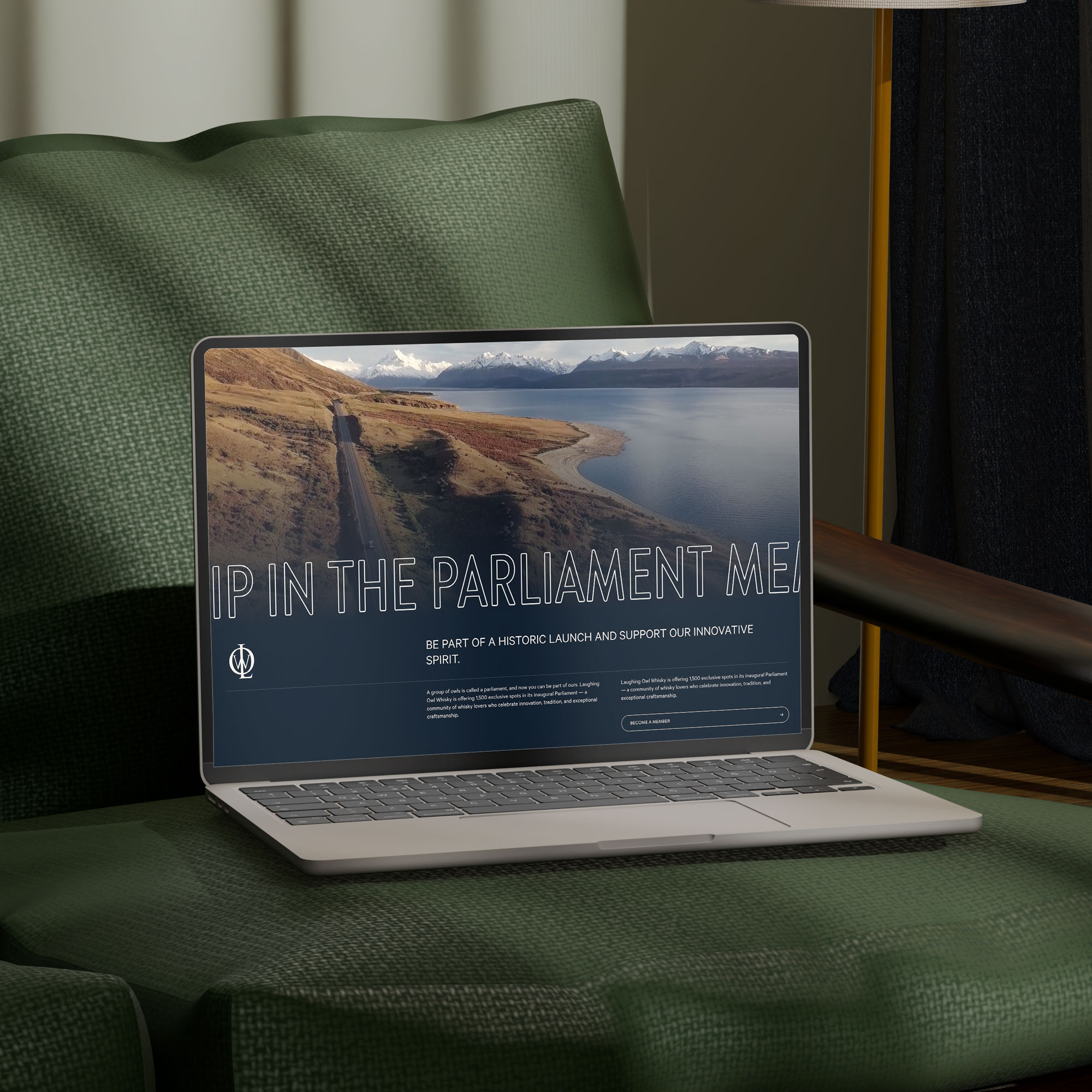
WordPress website design for TWC by Sky Media.
The Anatomy of a Perfect Website Brief: A Step-by-Step Guide
Ready to build your blueprint? Here are the essential components you need to include.
Step 1: Tell Your Story (The Company Overview)
Start by introducing your business to the agency as if they know nothing about you. This context is invaluable.
- Who are you? What is your company’s name and what do you do?
- What is your mission? What core purpose drives your business?
- What are your core values? Is your brand playful and disruptive, or trusted and authoritative?
- What is your unique selling proposition (USP)? What makes you different from and better than your competitors?
Pro Tip: Include links to any existing brand guidelines, logos, and your current website. This gives the agency an immediate feel for your brand’s world.
Step 2: Define the “Why” (Project Goals & Objectives)
This is the heart of your brief. Be specific about what you want this new website to achieve. Avoid vague statements.
Instead of: “I want more traffic.”
Write: “We aim to increase organic traffic from 5,000 to 10,000 monthly visitors within 12 months of launch, and grow our email newsletter sign-ups by 25%.”
Common website goals include:
- Generate more qualified leads (e.g., contact form submissions, demo requests).
- Increase online sales and revenue.
- Improve brand awareness and perception.
- Reduce customer support calls by providing better self-service resources.
- Attract top-tier talent to our careers page.
Ask yourself: “If this website could only achieve one thing, what would that be?” This helps you identify your primary objective.
Step 3: Know Your Audience (Target Audience)
You wouldn’t design a children’s toy using the same language and colors as a financial report. Your website must be built for its intended users.
- Who are your ideal customers? Create simple buyer personas. Give them names like “Marketing Mary” or “IT Director Ian.”
- What are their demographics? (Age, location, job title, industry)
- What are their pain points? What problems are they trying to solve that your business can help with?
- What are their goals and motivations? What does success look like for them?
- How do they search for solutions? What language do they use? What information do they need to make a decision?
Pro Tip: If you have any customer interviews, survey data, or support tickets, share them. This is gold dust for the agency to understand your audience’s real voice.
Step 4: Scope the Work (Project Scope)
This section outlines the “what” of the project. It defines the boundaries and helps the agency provide an accurate quote. Be explicit about what you need built.
- Number of Pages: Do you need a 5-page brochure site or a 50-page content-rich hub? (e.g., Home, About, Services, Blog, Contact)
- Key Functionalities: What does the website need to do?
- E-commerce shopping cart and payment processing?
- A membership portal or login area?
- A booking or appointment scheduling system?
- A complex contact form with dropdowns and file uploads?
- Integration with your CRM (like Salesforce or HubSpot)?
- Content Creation: Who is responsible for writing the website copy and providing the professional photos? (Be aware, this is often the client’s responsibility unless specifically included in the agency’s scope).
Step 5: Paint a Picture of Success (Design & User Experience)
This is where you guide the agency’s creative direction. Don’t just say what you like; explain why.
- Brand Guidelines: Reiterate any specific colors and fonts that must be used.
- Desired Look & Feel: Use descriptive words. Do you want the site to feel:
- Warm and inviting, or cool and professional?
- Bold and energetic, or minimalist and serene?
- Inspirational Examples (The “Do’s and Don’ts”): This is incredibly helpful. Provide 3-5 links to websites you admire and explain what you like about them (e.g., “I love the navigation on this site,” or “The use of animation here is engaging but not distracting”). Also, provide examples of what you don’t like.
- User Journey: Briefly describe the ideal path you want a visitor to take. For example: “A visitor lands on our blog, reads an article, clicks a call-to-action to download a guide, and is then presented with a contact form to book a consultation.”
Step 6: Plan for Growth (SEO & Ongoing Marketing)
A website is not a “build it and forget it” asset. Discuss its future from the start.
- SEO Strategy: Do you have an existing SEO strategy? Are there specific keywords you are already ranking for that you want to preserve? Does the agency need to conduct new keyword research?
- Technical Requirements: Do you need the site to be multilingual? Is mobile-first performance a top priority?
- Analytics: How will you track performance? Ensure Google Analytics 4 (GA4) and Google Search Console are part of the setup.
- Ongoing Maintenance: Who will handle security updates, backups, and technical support after the site launches? Clarify if this is part of the agency’s ongoing retainer.
Step 7: Set the Stage (Practical Details)
Finally, lay out the logistical framework for the project.
- Project Timeline: Do you have a specific launch date in mind? (e.g., tied to a product launch or a season). Be realistic and discuss this with the agency.
- Budget Range: This is crucial. Providing a realistic budget range allows the agency to propose solutions that fit your financial constraints. It shows you are serious and saves everyone time.
- Key Stakeholders: Who is the main point of contact on your side? Who has the final sign-off on designs and content?
- The Next Steps: What do you expect to happen after you send the brief? A meeting? A formal proposal?
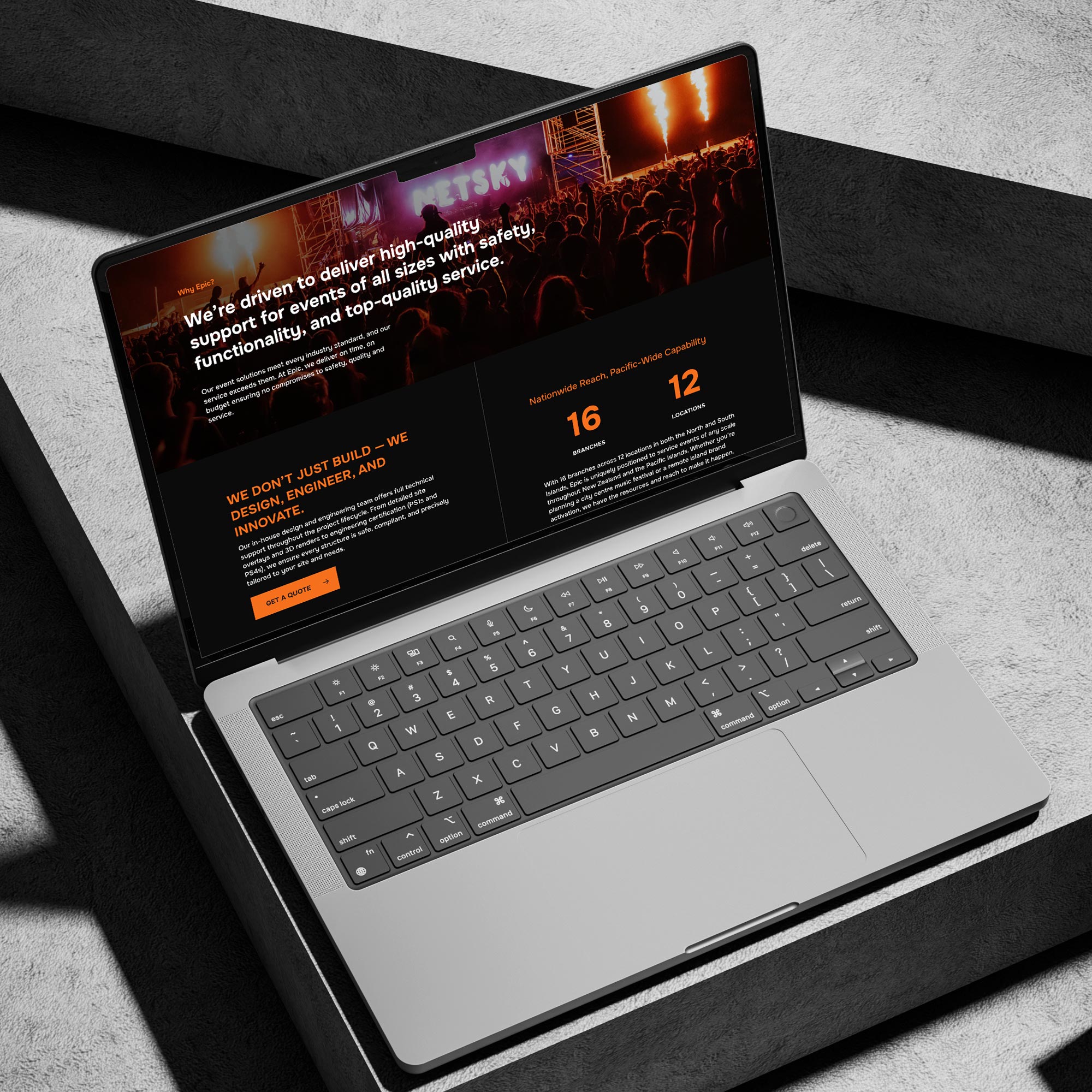
WordPress website design for Epic Events by Sky Media.
What to Do After You Send the Brief
Your job isn’t done once the brief is sent. The best client-agency relationships are partnerships.
- Schedule a Kick-off Meeting: Don’t just email the document. Schedule a call to walk through it together. This allows for immediate questions and discussion.
- Be Open to Questions: A good agency will probe deeper into your brief. Welcome their questions—it shows they are thinking critically about your project.
- Collaborate, Don’t Dictate: You are the expert on your business; they are the experts in web design and development. Trust their professional advice when they suggest a different approach based on your goals.
Common Pitfalls to Avoid
- Being Too Vague: “Make it pop” is not actionable feedback.
- Withholding Your Budget: This leads to proposals that are either unrealistically high or too basic for your needs.
- Design by Committee: While feedback is important, having too many decision-makers can paralyse a project. Appoint a single point of contact.
- Scope Creep: Adding new features and pages mid-project is the primary cause of budget and timeline blowouts. Please stick to the agreed-upon scope, or formally agree on changes and their impact.
Conclusion: Your Partnership Starts Here
A powerful website is the cornerstone of modern business. It’s your hardest-working employee, your 24/7 salesperson, and the face of your brand to the world. By investing time in creating a clear, comprehensive, and collaborative brief, you lay the foundation for a successful project and a final product that not only looks beautiful but also delivers tangible business results.
Your brief is more than a document; it’s the opening conversation in a partnership. Make it count.
Ready to turn your vision into a website that drives growth? The team at Sky Media are experts in translating ambitious briefs into stunning, high-performing digital experiences. Contact us today for a no-obligation consultation about your project.