

A new website is exciting. A better design. Faster pages. Clearer messaging. Better mobile experience. Maybe a completely new brand.
But if your existing website already ranks on Google, generates organic traffic and brings in enquiries, there is one question you should ask before approving the redesign: What happens to the SEO?
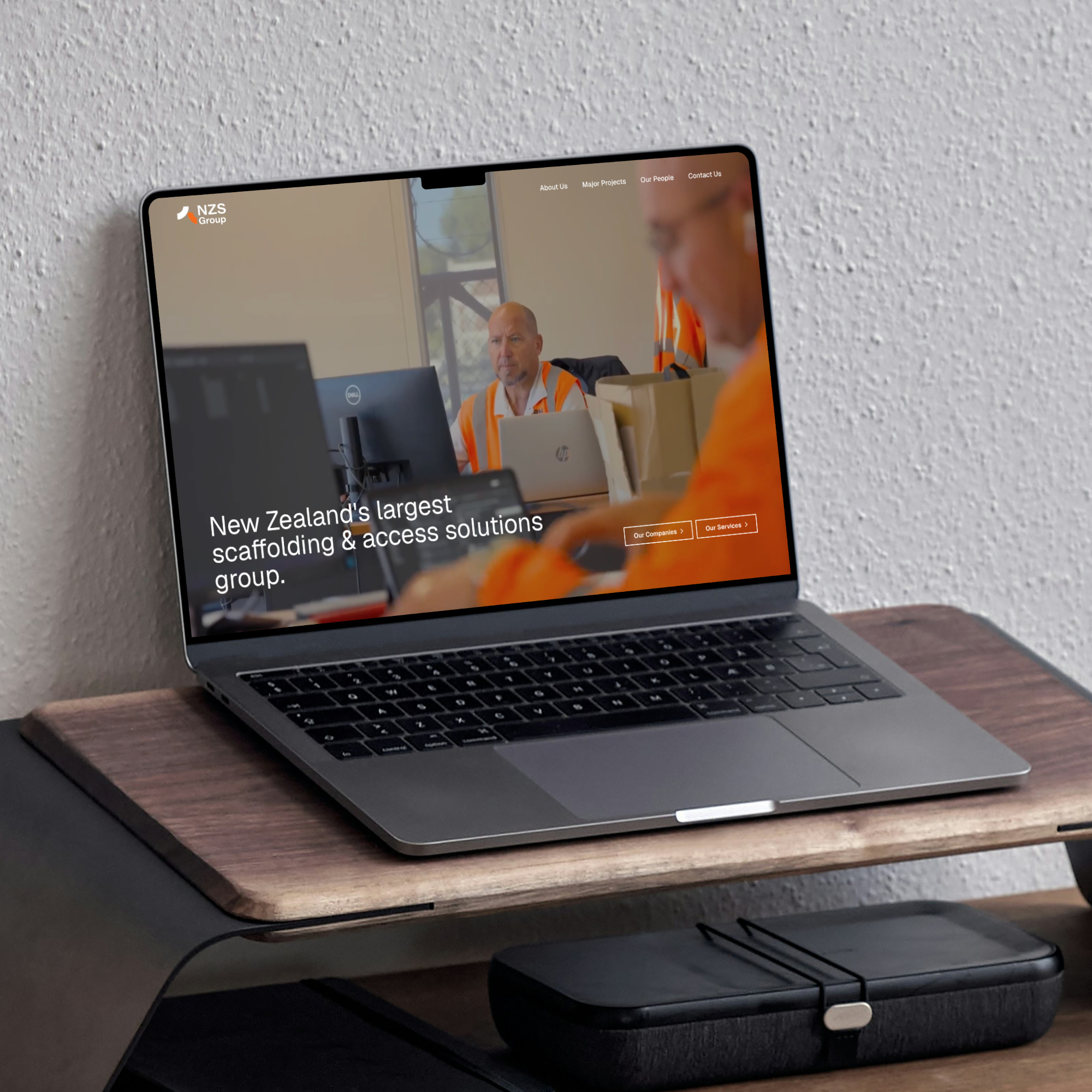
A website redesign isn’t just a visual change. Your existing website has built up a network of pages, URLs, internal links, backlinks, content and search engine signals over time.
If those things are changed without a plan, you can end up with a beautiful new website that gets far less traffic than the old one.
The good news is that a redesign doesn’t have to damage your SEO. Done properly, it can actually give your organic search performance a stronger foundation.
Your existing website already has SEO value
One of the biggest mistakes businesses make when redesigning a website is thinking about the new website as a completely fresh start. Your existing website may have taken years to build up its search visibility.
Some pages may rank for valuable keywords. Other pages may receive hundreds of visitors every month. Some may have links from other websites pointing to them. Others may have built up authority through years of being indexed by Google.
You can’t see all of that by looking at the homepage. That’s why the first step in an SEO-friendly redesign should be understanding what is already working.
Before changing the website, we look at:
- Which pages receive organic traffic
- Which pages rank for important keywords
- Which URLs have backlinks
- Which pages generate enquiries or sales
- Which content performs particularly well
- Which pages Google has indexed
- Which pages should be improved, removed or replaced
The goal isn’t to preserve every page forever. It’s to understand what you’re starting with before you start changing it.
A new design shouldn’t mean throwing away good SEO
Imagine your existing website has 10 pages. During the redesign, someone decides that only 6 of those pages are really needed. That might be perfectly reasonable from a design perspective. But what happens to the other 4?
If those pages disappear without a plan, Google may no longer find the content that was helping your website rank. And if another website has linked to one of those pages, that link could suddenly lead nowhere. This is where SEO needs to be involved before the new website is built, not after it launches. The new website should have an SEO plan.
Before development starts, we evaluate:
- Which existing pages are staying
- Which pages are being improved
- Which pages are being merged
- Which pages are being replaced
- Which pages can safely be removed
- Which new pages should be created
- Which URLs need redirects
This becomes the SEO roadmap for the redesign.
We don’t automatically change your URLs
URLs might not look particularly important to a business owner. But to Google, a URL identifies a specific page.
If your existing page is:
/services/commercial-construction/
and the new website changes it to:
/commercial-building/
that’s not simply changing a few words.
As far as search engines are concerned, you’ve created a different address. If the old URL has traffic, rankings or backlinks, the change needs to be handled properly.
When URLs need to change, we use redirects
A 301 redirect tells browsers and search engines that a page has permanently moved to another URL. For example:
/services/commercial-construction/
could redirect to:
/commercial-building/
But there is an important distinction here. A redirect should lead users to the most relevant replacement page. You shouldn’t automatically redirect every old page to the homepage simply because it’s convenient.
If a customer searched for a specific service and clicked through to a page about that service, sending them to a generic homepage creates a poor experience.
The same applies to search engines.
Your rankings aren’t the only thing you need to protect
It’s tempting to look at rankings as the main SEO metric during a redesign. But rankings aren’t the whole story.
A page ranking number one for an important search is valuable because it can bring people to your website. What happens after they arrive matters just as much.
A redesign is therefore an opportunity to look at the entire journey:
Google search → landing page → information → trust → enquiry
If your old website ranked well but was difficult to use, slow on mobile or unclear about what you offer, the redesign can improve the experience without sacrificing the search visibility you’ve already earned. That’s the ideal outcome.
A redesign can actually improve your SEO
Protecting existing rankings doesn’t mean leaving everything exactly as it is. In fact, a website redesign can be one of the best opportunities to improve SEO.
You may discover that:
- Important services don’t have dedicated pages
- Your content is outdated
- Several pages are competing for the same keyword
- Your navigation is confusing
- Internal links are weak
- Pages are slow
- Your mobile experience is poor
- Your location targeting isn’t clear
- Important information is difficult for Google to understand
A redesign gives you the chance to fix those problems at the same time.
Build around how your customers search
Your website structure should make sense to your customers and to search engines. If you provide several services, don’t force everything onto one generic “Services” page. We give important services their own useful destinations.
For example, an engineering company might have:
- Structural Engineering
- Civil Engineering
- Project Management
- Geotechnical Engineering
Each page can explain the service in detail and answer the questions customers actually have. This gives Google a much clearer understanding of what the business does. It also means someone searching for a specific service can land directly on the page that answers their question.
What about all your existing content?
A website redesign is a good opportunity to review your content. But don’t fall into the trap of deleting anything that doesn’t look important from a design perspective. Some of your most valuable SEO pages might not be the pages you consider the most important part of your website. A blog article, guide or service page might quietly generate organic traffic every month.
Before deleting content, we ask:
- Does this page bring visitors?
- Does it rank for anything valuable?
- Does another website link to it?
- Does it answer a question our customers have?
- Can the content be improved instead of removed?
Sometimes the best SEO decision is to update an old page rather than replace it.
The importance of internal links
When a website is redesigned, internal links often change without anyone thinking about SEO. A page that previously linked to three important service pages might launch with completely different navigation. That can affect how users move around the website and how search engines discover and understand your content. Internal links should be reviewed as part of the redesign.
Important pages should be easy to find, both through navigation and through relevant contextual links. Think of your website as a connected network rather than a collection of individual pages.
The new website also needs to be technically sound
A redesign should improve more than the appearance of your website. It should also provide a strong technical foundation.
That includes things such as:
- Mobile usability
- Page speed
- Crawlability
- Indexing
- Clean URL structure
- XML sitemap
- Canonical URLs
- Metadata
- Heading structure
- Image optimisation
- Internal linking
- Structured data where appropriate
You don’t need to understand all of these technical terms as a business owner. That’s the point of working with an experienced web and SEO team. The important thing is making sure these considerations are part of the project from the beginning.
What about AI search?
There’s another reason website structure matters now. People are increasingly using AI tools to discover businesses, research services and find answers. You don’t need to build a completely separate “AI SEO website.” The fundamentals still matter.
A website that clearly explains:
- What your business does
- What services you provide
- Who you work with
- Where you operate
- What makes you different
- Questions customers commonly ask
- Evidence that supports your claims
is easier for both people and search systems to understand.
Google itself continues to emphasise the importance of helpful, people-first content and established SEO fundamentals. The lesson isn’t that traditional SEO no longer matters. It’s that being clear, useful and authoritative matters more than ever.
What should happen before your new website goes live?
The launch itself is one of the most important stages of an SEO-focused redesign.
Before going live, we check:
1. The important pages are present
We make sure the pages that generated valuable traffic haven’t accidentally disappeared.
2. Redirects are working
We test important old URLs and confirm they reach the correct new pages.
3. Internal links work
We check through the website and check that links aren’t pointing to old or broken URLs.
4. Google can access the website
We make sure we haven’t accidentally blocked search engines from crawling or indexing the new website.
5. Metadata is in place
We check page titles, meta descriptions and heading structures.
6. Tracking is working
We make sure Google Analytics, Search Console and any enquiry or conversion tracking are functioning correctly.
7. Forms and enquiries work
This sounds obvious, but it’s easy to overlook. We test all contact forms, check the phone numbers, test all buttons, and make sure enquiries are actually reaching the business.
A technically successful website launch that loses enquiries isn’t a successful launch.
Don’t judge the redesign on day one
Even when a website migration has been handled correctly, search visibility can fluctuate. Google needs to crawl and process the new website and understand the changes. That’s why you should establish a baseline before launch and monitor performance afterwards.
We look at:
- Organic traffic
- Important keyword rankings
- Search impressions
- Click-through rates
- Top landing pages
- Enquiries and conversions
- Indexing
- Crawl errors
The important question is what happens over the following weeks and months.
A website redesign should be an SEO opportunity, not an SEO reset
Your existing website has already done some of the hard work. It has built content, earned links, accumulated search visibility and learned what customers respond to.
A new website should build on that foundation. The best redesigns aren’t simply about making the homepage look better. They’re about creating a website that is:
- Easier for customers to use.
- Easier for Google to understand.
- Better at converting visitors into enquiries.
- Built to grow with the business.
And importantly, it shouldn’t throw away the search visibility you’ve already worked hard to build.
Planning a new website?
If your business is already investing in SEO, talk to your SEO team before starting a website redesign.
At Sky Media, we design and develop WordPress websites with SEO considered from the beginning. That means looking at your existing search performance, content, URLs and website structure before deciding what the new website should look like.
A new website should move your business forward — not make you start your SEO from scratch. Get in touch with Sky Media and we’ll help you work out what should be protected, what should be improved and what opportunities the new website could create.


