If you’ve searched on Google lately, you’ve probably noticed something different at the top of the results page — a block of AI-generated text that summarises an answer before you’ve clicked anything. That’s Google’s AI Overview, and it’s one of the biggest changes to search in over a decade.
The headlines around it have been alarming. Traffic is down. Clicks are disappearing. Organic search is dying. For businesses that rely on Google to bring in customers, it sounds like bad news.
But here’s what those headlines tend to miss: the impact of AI Overviews is not the same for every kind of business. And for local NZ businesses: tradies, retailers, professional services, and hospitality the picture is considerably more encouraging than the general panic suggests.

This post explains what AI Overviews actually are, what the data shows and, most importantly, why local businesses in New Zealand are in a stronger position than most.
What Is a Google AI Overview?
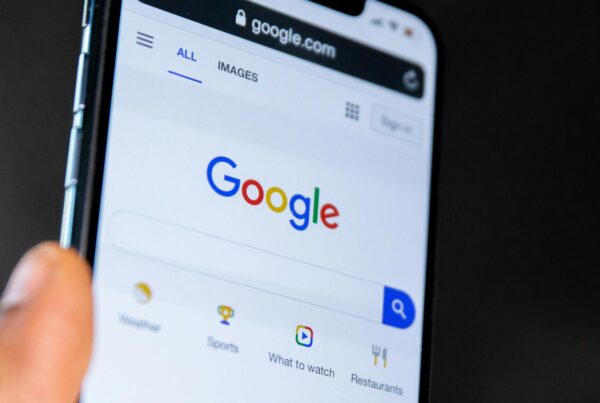
When someone searches Google for information, they now often see an AI-generated summary sitting above all other results. Google calls this an AI Overview (previously known as Search Generative Experience, or SGE).
Instead of a list of links to websites, the searcher gets a direct answer synthesised from multiple sources with links to those sources on the side or at the bottom. For many queries, users can get what they need without clicking through to any website at all.
This is what’s known as a zero-click search, and it’s grown significantly. Research from SparkToro found that 58% of all Google searches now end without a click to any website. For searches where an AI Overview appears, that figure jumps even higher.
For businesses that built their traffic on informational content such as blog posts answering general questions, how-to guides, and educational articles, this is a genuine challenge. Google is now answering those questions directly, without sending users anywhere.
The Data: How Often Do AI Overviews Actually Appear?
The statistics vary depending on who you ask and how they measure it, but a few things are consistent across multiple large studies in 2025 and early 2026:
~48%
of all tracked Google searches trigger an AI Overview as of early 2026
7.9%
of local searches trigger an AI Overview
99%
of AI Overviews appear on informational queries
+35%
more clicks for sites cited inside an AI Overview
- ~48% of all tracked Google searches trigger an AI Overview as of early 2026 — up from 31% a year earlier. (BrightEdge, Feb 2026)
- Only 7.9% of local searches trigger an AI Overview. (Ahrefs, Nov 2025)
- 99% of AI Overviews appear for informational queries — ‘what’, ‘how’, and ‘why’ questions. (SeoProfy, 2026)
These last two points are the most important for local NZ businesses. AI Overviews are overwhelmingly a phenomenon affecting informational content: research, definitions, explanations, comparisons. They are rarely triggered by the kinds of searches that drive local business enquiries.
Why Local Searches Are Different
Here’s the key distinction: there are two very different types of Google searches, and AI Overviews affect them very differently.
Informational searches are questions with general answers — “how does underfloor heating work”, “what’s the best material for a deck”, “what does an electrician charge per hour”. These are research queries. The searcher isn’t necessarily ready to hire someone; they’re learning. These are the searches AI Overviews dominate.
Local intent searches are queries where someone wants to hire, visit, or buy and they want to do it nearby. “Electrician Auckland”, “plumber Wellington urgent”, “builder Christchurch quote”, “café near me”. These are high-intent searches that drive real business. And AI Overviews almost never appear for them.
According to Ahrefs’ data, only 7.9% of local searches trigger an AI Overview. The local map pack — the three businesses that appear with a map at the top of results — still dominates local intent searches. It works the way it always has, and it’s not going anywhere.
This is very good news for any NZ business whose customers find them by searching for a local service. Your Google Business Profile, your local SEO, your reviews — these still work. The rules haven’t changed for you the way they have for national publishers or information websites.
What Kind of Businesses Are Most Affected?
To understand who needs to be most concerned about AI Overviews, it helps to look at which query types are most affected:
Most affected: Blogs and media sites, educational content, health and how-to guides, financial explainers, recipe sites, general Q&A content, anything built around answering research questions.
Moderately affected: E-commerce sites (Google is beginning to expand AI Overviews into commercial queries, though more slowly), national service providers targeting broad non-local terms.
Least affected: Local businesses with location-specific search intent: trades, hospitality, retail, professional services, healthcare, real estate.
If your business gets most of its enquiries from people searching for a specific local service, and that’s the case for the majority of Sky Media’s clients, you’re in the least affected category.
What Should Local NZ Businesses Actually Do?
The short answer: keep doing what works, and double down on it.
The fundamentals of local SEO haven’t changed. In fact, some of them have become more important:
1. Your Google Business Profile is more valuable than ever
The local map pack is one of the most AI-Overview-resistant parts of Google search. A well-maintained GBP, with accurate details, regular photos, consistent reviews, and active posts, is your strongest asset. If you haven’t invested time here, now is the moment.
2. Reviews remain your most powerful trust signal
Google’s local rankings are heavily influenced by review volume and recency. But there’s a new dimension: AI-generated answers increasingly draw from and reference businesses with strong review profiles. A business with 80 current, detailed reviews is more likely to be surfaced and mentioned in local pack results and, increasingly, in AI-generated responses to relevant queries.
3. Location-specific content on your website still matters
Service pages that clearly name the areas you work in, the specific services you offer, and the kinds of customers you help, this content gives Google the signals it needs to match you to local searches. It also gives AI systems the structured, authoritative information they need to reference you correctly.
4. Your website needs to be technically solid
Page speed, mobile experience, and structured data (schema markup) are all becoming more important, not less. Structured data in particular, the code that tells Google exactly what your business is, what services you offer, and where you operate, helps AI systems understand and reference your site accurately. It’s moved from a nice-to-have to a meaningful ranking signal.
5. Don’t abandon informational content, just be strategic about it
If your website has blog posts or guides answering questions your customers ask, these are still worth having. The approach shifts slightly: rather than writing purely to attract informational traffic, write content that demonstrates your expertise and builds trust with people who are already considering hiring you. Content that’s specific, authoritative, and locally relevant will still perform, and may even be cited by AI systems if it’s structured well.
The Bigger Picture: What’s Actually Changing
It’s worth stepping back from the day-to-day statistics and considering what AI Overviews represent at a bigger level.
Google is moving from being a directory of links to being an answer engine. For queries where the answer is general and informational, it increasingly provides that answer itself. For queries where the answer depends on location, personal preference, or real-world availability: who’s available, who’s nearby, who’s trusted in this area, it still needs to point people to real businesses.
Local businesses are, in many ways, the part of the internet that AI can’t replace. An AI can tell you how roof painting works. It cannot paint your roof. It can explain what a conveyancing lawyer does. It cannot handle your property transaction. The searches that lead to actual local business happen in the part of Google that’s proven the most resistant to AI disruption, and that’s where local businesses live.
A Note on What’s Still Changing
It would be misleading to suggest AI Overviews have zero impact on local businesses or that the landscape is completely stable. A few things worth watching:
- AI Overviews are expanding into commercial queries. They currently appear in only around 10–18% of commercial searches, but that share is growing. This is worth monitoring, particularly for e-commerce businesses and national service providers.
- Zero-click behaviour is increasing across all search types. Even without an AI Overview present, users are clicking through to websites slightly less often than they used to. This makes your Google Business Profile which answers many questions (hours, phone, reviews, location) without requiring a click even more important as a standalone conversion tool.
- AI Mode is a new surface to understand. Google launched AI Mode in 2025 as a dedicated AI search tab with 75 million daily users globally. It’s still a small channel relative to traditional search, but it’s growing and will become more relevant to track over time.
None of these developments are cause for alarm for local NZ businesses right now. But they are worth being aware of and they’re exactly the kind of thing a good SEO partner should be monitoring and acting on for you.
Local SEO Is Still One of the Best Investments a NZ Business Can Make
While the global SEO landscape is shifting in meaningful ways, the fundamentals of local search remain intact, and for NZ businesses that serve a geographic area, the opportunity is as strong as it’s ever been.
The businesses that will come out ahead are the ones that stay consistent with local SEO fundamentals: a well-maintained Google Business Profile, a steady flow of reviews, a fast and mobile-friendly website, and location-specific content that clearly communicates who they serve and where.
If you’d like to understand how your current SEO is performing in this changing environment, or what you should be prioritising, Sky Media offers a free audit that looks at exactly these signals. Request a free SEO audit.