Google Ads NZ

Google Ads vs SEO: Which Should Your NZ Business Invest in First?

By Digital Marketing

It’s one of the most common questions we get asked — and there’s a good reason for that. Both Google Ads and SEO promise the same outcome: more visibility on Google, more traffic, more enquiries. But they work in completely different ways, on completely different timelines, and they’re suited to different situations.

If you’ve got a limited budget and you’re trying to decide where to put it first, this is a genuinely important decision, not just a technical one.

This post breaks down how each one actually works, what the real trade-offs are, and how to figure out which one makes sense for your business right now. In a lot of cases, the answer ends up being both but not necessarily at the same time, or in the same proportions.

The Core Difference, in Plain Terms

Google Ads is rented visibility. You pay for a position at the top of the search results, and the moment you stop paying, that visibility disappears. It’s fast, predictable, and you can turn it on or off whenever you like.

SEO (Search Engine Optimisation) is earned visibility. You invest in your website, content, and authority over time so that Google ranks you organically without paying for each click. It takes longer to build, but once you’re ranking well, that traffic tends to keep coming with far less ongoing cost.

Google Ads is like renting a billboard. SEO is like buying the land it’s standing on.

Neither is better in an absolute sense. They’re suited to different goals, different timelines, and different stages of a business.

Google Ads vs SEO: A Side-by-Side Comparison

Here’s how the two stack up across the factors that matter most when deciding where to invest first:

FactorGoogle AdsSEO
Speed to resultsFast, can generate leads within days of launchingSlow, typically 3 to 6+ months to see meaningful traction
Cost structureOngoing, you pay for every click, every monthUpfront effort, then increasingly free traffic over time
When you stop payingTraffic stops almost immediatelyRankings and traffic persist, with maintenance
Best forImmediate leads, new offers, testing demand, seasonal pushesLong-term, compounding visibility and brand authority
Budget controlVery precise, set and adjust daily budgets directlyHarder to predict ROI early on, but lower cost per lead long-term
Trust & credibilityLower, some searchers actively skip paid adsHigher, organic results are seen as more credible
Risk if you stopHigh, leads dry up the moment you pauseLow, rankings tend to hold for a period after you pause

When Google Ads Should Come First

Google Ads is usually the right starting point when speed matters more than long-term cost efficiency. A few specific situations where Ads makes sense as the first investment:

  • You’re a brand new business with no online presence yet. SEO takes time to build because Google needs to learn to trust your website. If you need leads now, Ads can fill that gap while your SEO foundation is being built in the background.
  • You’re launching a new product, service, or location. If you’ve just added a new service line or opened in a new area, you don’t have existing rankings or reviews to lean on yet. Ads let you generate visibility immediately while your organic presence catches up.
  • You want to test demand before committing further. Not sure if a particular service or offer will actually generate enquiries? Ads let you test quickly. You can have data within days, rather than waiting months to see if an SEO strategy is working.
  • You have seasonal or time-sensitive demand. If you sell something with a short, predictable peak (Christmas, summer outdoor products, tax season for accountants) Ads let you show up exactly when demand spikes, without waiting for SEO to catch up to a narrow seasonal window.
  • Your industry is highly competitive and slow to rank for organically. Some categories are dominated by large, well-established competitors with years of SEO investment. Ads offer a way to compete for visibility immediately, while organic rankings build more gradually in the background.

The common thread: Ads make sense when you need results now, and you’re willing to pay an ongoing cost per lead in exchange for that speed.

When SEO Should Come First

SEO tends to be the smarter first investment in different circumstances — generally when you can afford to play a longer game in exchange for a better long-term return.

  • You’re a local business relying on consistent, ongoing enquiries. If your customers are searching “plumber Hamilton” or “café near me” regularly, ranking organically in the local map pack and search results delivers a steady stream of leads without an ongoing per-click cost.
  • You have a longer runway and want to build a durable asset. SEO compounds. A well-optimised website with strong rankings keeps generating traffic month after month, long after the initial investment. It becomes a genuine business asset rather than an ongoing expense.
  • Your margins don’t comfortably support a high cost-per-click. In some industries, competitive Ads costs can eat heavily into margins. If that’s the case for you, building organic visibility avoids that ongoing tax on every lead.
  • Trust and credibility matter to your customers. Some research shows users are more likely to trust and click organic results over paid ones, particularly for higher-consideration purchases like legal services, healthcare, or large home improvement projects.
  • You’re already established but invisible online. If you’ve got a great reputation and word-of-mouth business but minimal online visibility, SEO often delivers the best return — you’re not starting from zero, you’re catching your digital presence up to your real-world reputation.

The common thread: SEO makes sense when you can invest patiently for a return

A Simple Way to Decide

If you’re still unsure, ask yourself these three questions:

1. How urgently do you need leads?

If the answer is “now” or “within the next few weeks”, Ads should be part of your starting strategy. If you can comfortably wait three to six months for results to build, SEO can lead.

2. What does your budget actually allow?

Ads require an ongoing monthly spend that scales with how much traffic you want. SEO requires upfront investment in your website and content, with a lower (but not zero) ongoing cost to maintain and build on it. If cash flow is tight month to month, SEO’s lower ongoing cost may suit you better once the initial work is done.

3. Is your website actually ready for either?

This is the one most businesses overlook. If your website is slow, outdated, or doesn’t clearly communicate what you do, both Ads and SEO will underperform — you’ll be sending traffic (paid or organic) to a page that doesn’t convert it. In many cases, the real first investment should be your website itself, before either channel.

Why “Both, But Sequenced” Is Often the Smartest Answer

For a lot of NZ businesses, the most effective approach isn’t choosing one over the other — it’s sequencing them deliberately.

A common and effective pattern looks like this:

  • Start with Ads to generate leads immediately while your SEO foundation — your website, your content, your Google Business Profile — is being built and optimised in the background.
  • Let SEO build over months as your organic rankings start to gain traction, your reliance on paid traffic for the same keywords gradually decreases.
  • Shift Ads budget toward gaps SEO doesn’t cover once your organic presence is solid for your core services, reallocate Ads spend toward new services, new locations, or competitive terms that are harder to rank for organically.

This way, you’re never waiting in a gap with no traffic, and you’re not paying indefinitely for visibility that you could eventually earn for free.

What Most NZ Businesses Get Wrong

The most common mistake isn’t choosing the wrong channel, it’s underinvesting in whichever one they choose.

A Google Ads campaign with a budget too small to gather meaningful data, or an SEO strategy treated as a one-off blog post rather than an ongoing programme, will underdeliver regardless of which channel it is. Both Ads and SEO reward sustained, properly resourced effort. Half-measures in either tend to produce disappointing results that lead businesses to wrongly conclude “that channel doesn’t work for us”, when the real issue was the level of investment.

The second most common mistake is sending good traffic either paid or organic to a website that isn’t built to convert it. This is worth repeating: no amount of traffic fixes a website that doesn’t clearly communicate what you do, doesn’t build trust, and doesn’t make it easy to get in touch.

Not Sure Where to Start? We Can Help You Figure It Out

Sky Media manages both Google Ads campaigns and SEO strategy for NZ businesses which means our advice isn’t shaped by only being able to offer one of them. We look at your situation, your budget, your timeline, and your industry, and recommend the approach (or sequence) that actually makes sense for you.

If you’d like an honest assessment of where to start, we offer a free audit covering your website, your current visibility, and where the biggest opportunities are.

Digital Marketing for Tradies: How NZ Builders, Plumbers & Electricians Get More Leads Online

By Digital Marketing, Tips and Guides

Word of mouth used to be enough. For a long time, it was. But for most NZ tradies today, referrals alone don’t fill the calendar, especially if you’re growing, branching into new areas, or trying to reduce the slow periods that come every year.

The tradies consistently winning new work are the ones who’ve figured out how to be visible online when someone picks up their phone and searches “electrician near me” or “builder Wellington quote”. That search happens hundreds of times a day across New Zealand, and right now, someone is getting that job, and it might not be you.

This guide is a plain-language breakdown of what actually works for tradies online

Why Digital Marketing Works Differently for Tradies

Tradies have a natural advantage in digital marketing that a lot of industries don’t: you serve a specific local area, and Google is built to reward that.

When someone searches for a tradie, they’re not browsing, they have a problem right now, and they need it fixed. That’s called high-intent search, and it’s the best kind of traffic you can get. These are people who are actively looking to hire, often with urgency.

The challenge is making sure you show up, and making sure that when you do, your online presence is good enough to earn the call over the other options on the page.

The Four Things That Drive Tradie Leads Online

You don’t need to do everything. But there are four areas where most tradie businesses see the biggest return:

1. Your Google Business Profile

If you only do one thing from this entire article, make it this: set up and optimise your Google Business Profile (GBP).

Your GBP is what appears in Google Maps and the map pack. The three businesses that show up at the top of local search results. It’s free, it’s visible, and for trades work, it’s often the first thing a potential customer sees.

A well-optimised GBP for a tradie should have:

  • Your correct trade category (e.g. “Plumber”, “Electrician”, “Builder” — be specific)
  • Your service area clearly defined
  • At least 10 real photos, for example your van, your team, completed jobs
  • A steady flow of Google reviews from happy customers
  • Your services listed individually (e.g. “Hot water cylinder replacement”, “Bathroom rewiring”, “Deck building”)
  • Regular posts and a quick-response habit for reviews and questions

The trades businesses that dominate local search in NZ aren’t doing anything complicated. They’ve just taken the time to fill out and maintain their GBP properly.

2. A Website That Works as a Sales Tool

A lot of tradie websites look like they were built ten years ago and haven’t been touched since. They load slowly, they’re impossible to navigate on a phone, and they give a potential customer no real reason to choose you over anyone else.

Your website is your digital shopfront. If someone clicks through from Google, whether that’s from your GBP, an ad, or an organic result, your website is where they decide whether to call you or hit the back button.

For tradies, the most important things a website needs to do are:

  • Load fast on mobile. Most people searching for trades are on their phone. If your site takes more than a few seconds to load, they’ll leave before they see anything.
  • Show your phone number immediately. It should be at the top of the page, clickable, and visible without scrolling. Don’t make people hunt for it.
  • List your services clearly. Each main service you offer should have its own page or section. This helps customers, and it helps Google understand what you do.
  • Include real photos. Before and after shots, completed jobs, your team at work. Real photos build more trust than anything else on the page.
  • Show social proof. Your Google rating, a few short testimonials, or logos of organisations you’re certified with (e.g. Master Electricians, Licensed Building Practitioners).
  • Have a clear call to action. Whether it’s a quote form or a phone number, make it obvious what you want them to do next.

A good tradie website doesn’t need to be complicated. It needs to be clear, fast, and trustworthy.

3. Google Ads (When You Want Leads Now)

SEO and your Google Business Profile take time to build momentum. Google Ads can fill the gap.

For tradies, Google Ads work particularly well because you can target people who are actively searching for your specific service in your area right now. When someone searches “emergency plumber Auckland” at 8pm on a Tuesday, a well-set-up Google Ad puts you in front of that person at exactly the right moment.

A few things that matter for tradie Google Ads:

  • Search ads only. For most tradies, search ads (text ads that appear above organic results) are the right format. You’re reaching people with immediate intent.
  • Target your actual service area. Don’t pay for clicks from people outside the area you work in. Set your targeting to cover your real coverage zone.
  • Send traffic to a dedicated page. Not your homepage but a page that matches exactly what the ad promised. If your ad says “Registered Electrician Auckland — Free Quote”, the page should open with those words.
  • Track your calls. Google Ads can track which calls came from which ads. Without this, you’re flying blind on what’s working.

Done right, Google Ads can deliver a consistent flow of qualified leads with a measurable cost per enquiry. Done wrong, they burn through budget fast with nothing to show for it which is why getting the setup right matters.

4. Reviews Are Your Most Powerful Marketing Asset

Think about the last time you hired a tradie you’d never used before. Chances are you checked their reviews first.

Your potential customers do exactly the same thing. Reviews are the single most persuasive element of your online presence, more than your website copy, more than your ads, more than your social media.

For tradies, the goal is a steady, ongoing stream of genuine reviews — not a one-off burst.

Here’s what works:

  • After every completed job, ask the customer directly: “Would you mind leaving us a quick Google review? It really helps us out.”
  • Follow up with a text or email that includes a direct link to your Google review page, make it one tap, not a process.
  • Ask customers to mention the specific job and location in their review (e.g. “bathroom renovation in Papakura”); these details help your local SEO.
  • Respond to every review, good and bad. It shows professionalism and signals to Google that you’re active.

A builder with 60 solid reviews will consistently win more work than one with 5, even if the quality of work is identical. Reviews are trust at scale.

Here’s an example from one of our clients — Tasman Sparkies, a Nelson-based electrical business. Their website is built to convert visitors into calls.

A conversion-focused homepage Sky Media designed for Tasman Sparkies, showing clear services infomation, location, and a prominent call-to-action.

The social proof section of the Tasman Sparkies website, displaying Google reviews to build trust with potential customers.

What About Facebook and Instagram?

Social media comes up a lot in these conversations, so it’s worth addressing directly.

For tradies, social media can work, particularly for brand awareness and showcasing your work. Before and after photos on Facebook or Instagram can do well, especially in local community groups.

But for most trades businesses, social media is a secondary channel. The reason: people don’t usually scroll Facebook when their hot water is broken or they need a new circuit board. They go to Google.

If you have the time and enjoy it, posting your work on social is worthwhile. But if you’re choosing where to invest your energy first, Google (your GBP, your website, and Ads) will almost always deliver a better return for trades businesses.

A Realistic Starting Point

If you’re not sure where to begin, here’s a practical order:

  • Step 1: Claim and optimise your Google Business Profile. It’s free and often the fastest win.
  • Step 2: Make sure your website is up to date and has clear information, call to action and phone number.
  • Step 3: Start asking every happy customer for a Google review and make it a habit.
  • Step 4: Once your profile and website are solid, consider Google Ads to accelerate leads in specific services or areas.

You don’t need to do all of this overnight. Each step compounds on the next, for example: a better GBP leads to more calls, more calls lead to more reviews, more reviews improve your ranking, and a well-built website converts more of those visitors into jobs.

Quick-Reference: Tradie Digital Marketing Checklist

Google Business Profile claimed, complete, and active

  • Service area and categories set correctly
  • At least 10 real photos uploaded
  • Consistent flow of Google reviews being collected
  • All reviews replied to
  • Website is up to date
  • Phone number visible and tappable at the top of every page
  • Each main service has its own page or section
  • Real job photos on the website
  • Google Ads considered once foundation is in place
  • Website and GBP details consistent (name, address, phone)

The One Mistake Most Tradies Make Online

The most common mistake we see is treating online presence as a set-and-forget thing.

A website built three years ago that hasn’t been touched. A Google Business Profile claimed but never updated. A handful of reviews from 2022. No recent photos.

Google pays attention to freshness and activity and so do customers. A profile or website that looks dormant signals uncertainty — is this business still operating? Are they any good? Do they actually work in my area?

The tradies getting the most leads online are the ones treating their digital presence like a tool that needs to be maintained, not a box they ticked once.

Need Help Getting More Work Through Your Website and Google?

Sky Media works with NZ trade businesses on everything from website design to Google Ads management and local SEO, building the kind of online presence that consistently fills the calendar.

Whether you’re starting from scratch or want to improve what you’ve already got, we can help you figure out where the biggest opportunities are and what to do about them. Talk to Sky Media about Tradie Marketing.

Why Your Google Ads Are Getting Clicks But Not Calls

By Google Ads, Tips and Guides

You’re spending money on Google Ads. People are clicking. But the phone isn’t ringing, and the enquiry form is sitting empty.

It’s one of the most frustrating things a business owner can experience. You’re paying for traffic. The traffic is arriving. Something is going wrong in between.

The good news: this is a fixable problem. And once you understand why it’s happening, the solution is usually clearer than you’d expect.

In most cases, the culprit isn’t your ads. It’s what happens after the click.

First, Let’s Separate the Two Jobs

Google Ads and your landing page have two completely different jobs, and confusing them is where most businesses go wrong.

Your ad’s job is to get the right person to click. That’s it. It needs to show up for the right search, say something relevant, and earn the click from someone who could genuinely become a customer.

Your landing page’s job is to convert that click into an action: a call, a form fill, a booking.

If your ad is getting clicks, it’s probably doing its job reasonably well. The problem is almost certainly on the landing page side.

The Most Common Reason: Intent Mismatch

Here’s the core issue in plain language: the person clicked your ad expecting one thing, and your page gave them something different.

This is called an intent mismatch, and it’s the number one reason clicks don’t turn into customers.

A few real-world examples of how this plays out:

  • Someone searches “emergency plumber Wellington” and clicks your ad — but lands on your homepage, which talks generally about all your plumbing services. They wanted urgency and a phone number. They got a brochure. They left.
  • Someone searches “how much does a bathroom renovation cost” and clicks your ad — but your page has no pricing information at all. Their question isn’t answered. They go back and click a competitor.
  • Someone searches “builders Christchurch” and clicks your ad — but your page is slow to load, hard to read on mobile, and the contact form is buried at the bottom. Too much friction. They give up.
    In each case, the ad worked. The page didn’t.

The Homepage Problem

Sending Google Ads traffic to your homepage is one of the most common and costly mistakes in digital advertising.

Your homepage is designed for everyone: new visitors, existing customers, people who just want your phone number, people researching your industry. It tries to do too many things at once. But the person who clicked your ad? They have a very specific need. They searched for something specific. They clicked something specific. Sending them to a general page that doesn’t match what they were looking for is like a customer walking into a shop and asking for running shoes — and the staff point them towards a giant sign that says “We sell all kinds of footwear.”

Every ad campaign should send traffic to a page that’s built around exactly what the ad promised. This is called a dedicated landing page, and it’s one of the highest-leverage things you can do to improve your return on ad spend.

What a High-Converting Landing Page Actually Looks Like

You don’t need a complicated page. You need a focused one. Here’s what the best-performing landing pages for NZ service businesses tend to have:

A clear, specific headline
It should match (or closely mirror) the search term someone used and the promise in your ad. If your ad said “Fast Hot Water Cylinder Replacement — Auckland”, your headline should confirm that’s exactly what this page is about.

One clear call to action
What do you want the visitor to do? Call you? Fill in a quote form? Book online? Pick one and make it obvious. Pages that ask visitors to do five different things often result in them doing nothing.

A phone number that’s easy to find and tap
On mobile (where most local searches happen), your phone number should be visible without scrolling and clickable. A number buried in a footer, or displayed as an image that can’t be tapped, is a conversion killer.

Trust signals above the fold
“Above the fold” means what’s visible before someone scrolls. This prime real estate should include something that builds confidence fast: a Google rating, a short testimonial, a badge (“NZ Certified”, “10+ Years Experience” etc.), or a simple “We’ll call you back within the hour” promise.

A short, frictionless form (if you use one)
Every extra field you add to a form reduces the chance someone completes it. For most service businesses, name, phone number, and a one-line description of the job is enough to start a conversation. Don’t ask for information you don’t need yet.

Fast load speed and a clean mobile layout
Google’s own research shows that pages taking more than a few seconds to load see significantly higher bounce rates. On a phone with variable signal, slow pages feel broken. If your page loads slowly or looks cluttered on a small screen, you’re losing customers before they even read a word.

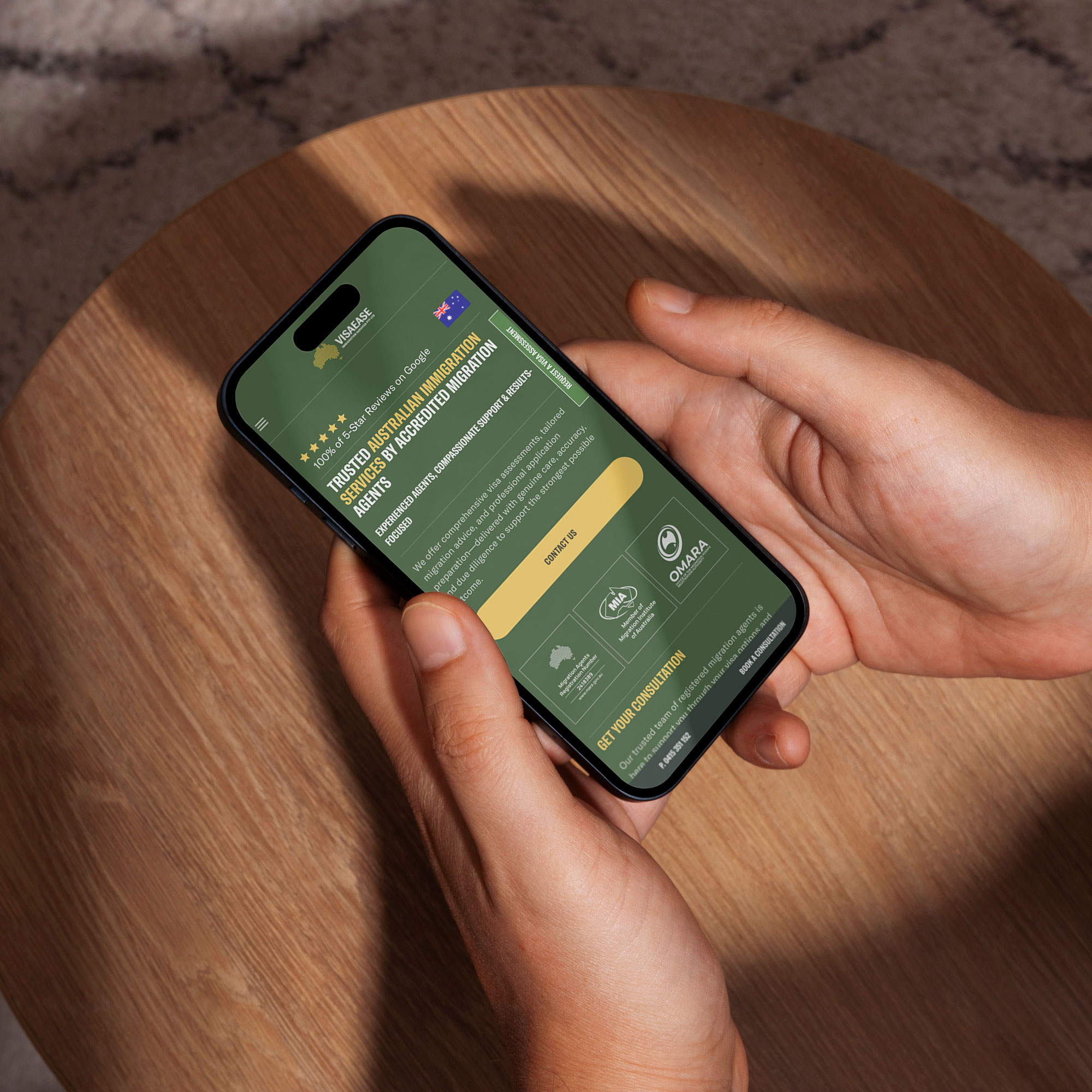
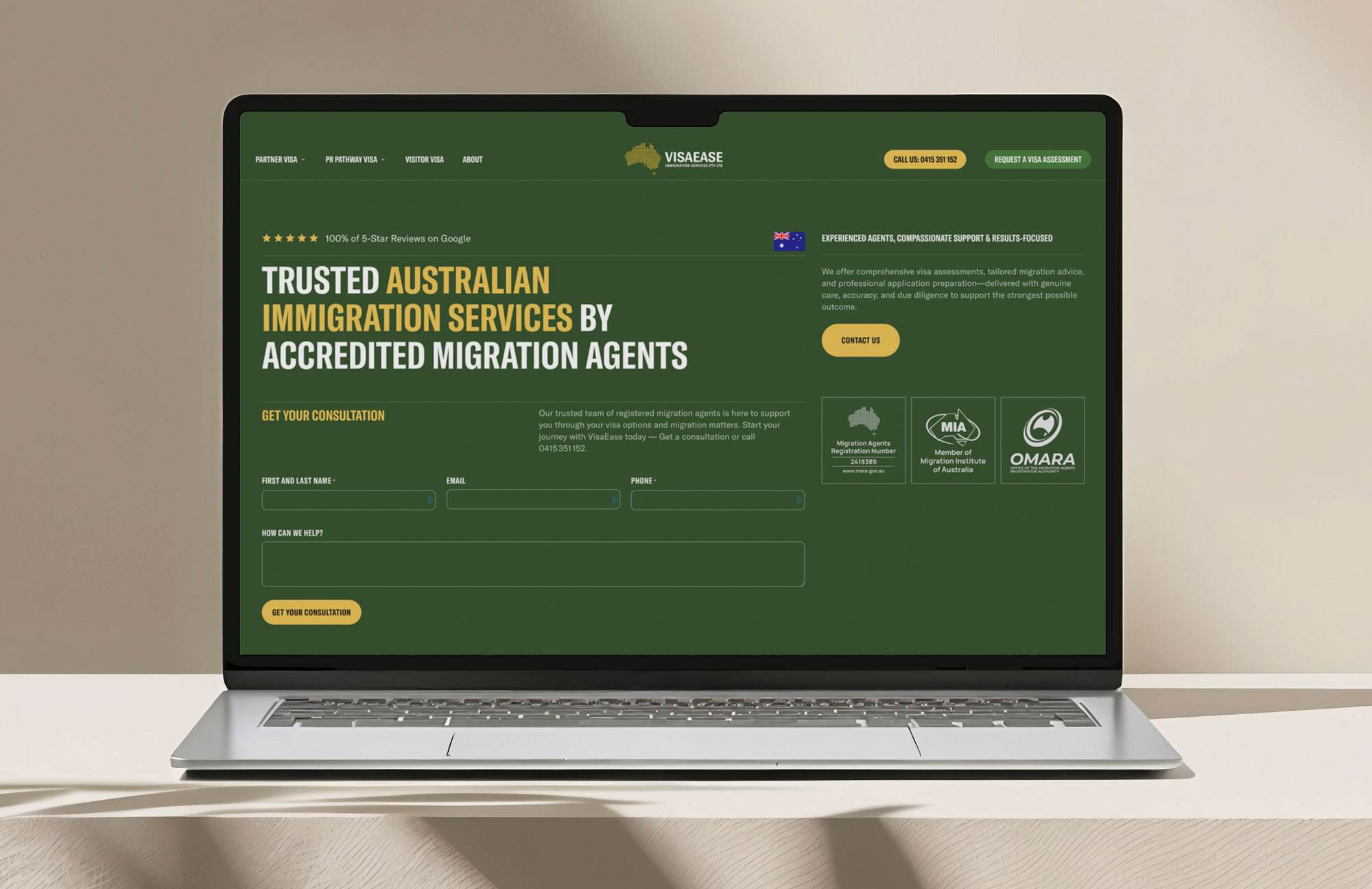
Example of conversion focused landing page Sky Media created for Visa Ease.

A conversion-focused landing page Sky Media designed for Visa Ease.

Speed and Mobile: The Silent Conversion Killers

It’s worth spending a moment on these two because they’re responsible for more lost conversions than most business owners realise.

1. Speed: If your page takes longer than 3 seconds to load on a phone, a large proportion of visitors will leave before seeing anything. This is money you’ve already paid for — gone. Page speed is affected by things like image file sizes, hosting quality, and how your website is built.

2. Mobile: Well over half of all Google searches happen on a phone. If your landing page isn’t designed with mobile as the priority, for example, text is too small, buttons are too close together, layout looks awkward on a small screen, you’re creating friction at exactly the wrong moment.

These aren’t nice-to-haves. In 2026, they’re the baseline.

The Message Match Principle

There’s a simple rule that the best-performing ad campaigns follow: the message in your ad should match the message on your landing page. This sounds obvious, but it’s surprising how often it breaks down in practice.

If your ad says:
“Free Quote — Commercial Cleaning Auckland — Same-Day Response”, then your landing page should immediately reinforce all three of those things: free quote, Auckland, same-day response. If the page talks about your residential services, doesn’t mention Auckland, and has a contact form that says “We’ll be in touch within 3–5 business days”, the message has broken down.

Every step from search to click to page should feel like a continuous, consistent experience. When it does, conversion rates improve significantly.

A Quick Self-Check: Is Your Landing Page Doing Its Job?

Ask yourself these questions about the page your ads are sending traffic to:

  • Does the headline match what my ad promised?
  • Is it immediately obvious what I want the visitor to do?
  • Is my phone number visible and tappable on a phone?
  • Is there at least one trust signal (reviews, rating, credential) above the fold?
  • Does my contact form have fewer than five fields?
  • Does the page load in under three seconds on a phone?
  • Does the page make sense to someone who has never heard of my business?

If you answered “no” or “not sure” to any of these, you’ve likely found where your conversions are leaking.

The Bigger Picture: Ads and Your Website Work Together

Here’s the thing: Google Ads can drive excellent results, but only when the website behind the ads is built to convert.

A well-managed ad campaign sending traffic to a weak landing page is like running a great promotional offer and then having the wrong address on the flyer. The interest is there. The follow-through isn’t.

This is why businesses that invest in both a well-run ads strategy and a properly built website consistently outperform those who only focus on one. The two amplify each other.

For NZ businesses running Google Ads, the fastest way to improve your cost per lead is usually not to spend more on ads, it’s to improve the page those ads send people to.

Not Sure Why Your Clicks Aren’t Converting?

Sky Media works with NZ businesses on both sides of this equation: building high-converting websites and landing pages, and managing Google Ads campaigns that are set up to actually deliver results.

If you’re spending money on ads and not seeing the returns you expected, it’s worth getting a second pair of eyes on both your campaigns and the pages they’re pointing to. Get a free audit of your website today.

How Do Google Ads Work?

By Google Ads

Google Ads is a pay per click (PPC) advertising solution that offers an extremely effective way of driving relevant qualified traffic to your website, when people are searching Google for the types of products, or services your business offers.

Maybe you plan to run a promotion, or perhaps you just need a quick injection of sales? A Google Ads Campaign is the fastest way to get your website listed on the 1st Page of Google for the Keywords of your choice e.g ‘Painter Blenheim,’ ‘Botox Christchurch,’ or ‘Car yards Auckland.’

Google Ad’s pay-per-click (PPC) setup is like a bidding system, where companies bid to have their ads shown to the relevant audience. Like all bidding systems, those with the highest bid win. As a result, each time your ad is clicked on, Google charges a small fee. Click fees range from $1 – $15 per click, depending on your industry and location.

Sky Media’s Google Experts will begin by creating a list of Keywords that are relevant to the products and services you want to promote and sell. Keyword examples for a builder in Nelson could be: ‘New Homes Nelson’, ‘New Builds Nelson’, ‘Builder Nelson’, ‘Commercial Builder Nelson.’

Our copywriters will create a short eye-catching Google Ad that will capture your ideal client’s attention immediately. We’ll then confirm your Google click budget, the locations you want to target, and the days of the week that suit you. $20 – $30 per day is a good start.

Once your campaign is live, Google will send the people who search for what you’ve got to your Google Ad. Visitors will find your ad and a link to your website up in the paid ad section at the top of Google’s 1st Page.

Once you’re on Google’s 1st Page, you’ll notice more clicks to your website and an increase enquiries. Get ready to answer the phone, or emails, or to witness an increase in sales.

Once your Google budget is used up for the day, your ad will be taken down and replaced by other businesses targeting the same market. Not to worry, you’ll reappear the next morning when your budget’s refreshed.
Our Google Technicians will optimise your campaign every day, so the cost per click (CPC) will become cheaper over time, which means you’ll receive more website traffic for less.

Sky Media’s down-to-earth team run 100% transparent Google Ad Campaigns, so you’ll see exactly how much of your budget is going to Google every day. Total budget transparency is a key point of difference with our campaigns.
If at any stage you need to discuss, or adjust your campaign, your dedicated Google Account Manager will be happy to assist.

The Difference Between Google Ads and SEO

Google Ads are rapid, they’re the fastest way to get your website on Google’s 1st Page (we’re talking a matter of days), but they’re PPC, which means you’ll pay for every click to your site. On the other hand, SEO (Search Engine Optimisation) takes 30 days to generate movement, and at least 90 days to generate results, so it’s comparatively slower. Still, once you reach that landing strip on Page 1, all of the clicks with SEO are free! So, which one will it be?

Well, it depends whether you want immediate clicks, or long-term clicks. What we can say is that it’s no surprise to us that all of our top-performing clients have opted for our Supercharged SEO and Google Ads Combo. Yes, that’s right, they did both! They chose immediate website visits and clicks with Google Ads, as well as consistent web traffic for the long-haul with SEO. As a result, they’ve all benefited from impressive growth.

If you’d like to have a free Discovery Discussion with one of our Google Experts, we can explore the potential benefits for your business. If you’re interested, we’ll identify your business goals, and suggest an affordable Google strategy that’s designed to get results. Just call 0800113772 to book your complimentary Discovery Discussion today.