SEO Insights

Local SEO in 2026: A Guide for Small Businesses

Local SEO in 2026: How Small Businesses Can Outrank Big Brands

By SEO, Tips and Guides

Big brands have budgets, teams, and name recognition. But in local search, that doesn’t automatically mean they win.

In 2026, Google’s local results still come down to a simple idea: show the best nearby option for the searcher. Google even explains local rankings are largely shaped by relevance, distance, and prominence.

Local SEO in 2026: A Guide for Small Businesses

That’s good news for small businesses — because “prominence” isn’t just about being famous nationwide. It can also mean being trusted, visible, and consistently talked about in your community.

Here’s how to compete (and often beat) bigger players with a focused Local SEO strategy that’s practical, sustainable, and easy to maintain.

1. Win the “relevance” game by being crystal clear about what you do

Local SEO starts with one question: Does Google understand your business properly?

If your Google Business Profile (GBP) category is wrong, your services are vague, or your website is a “general brochure” with no clear focus, you’ll struggle — even with lots of reviews.

Start here:

  • Choose the most accurate primary category (not the one that sounds nicest).
  • Add secondary categories only if you truly offer those services.
  • Use plain-language service descriptions that match how customers search (“blocked drain repair”, not “hydraulic solutions”).

Google doesn’t rank what it can’t confidently identify — and category clarity is one of the biggest levers small businesses can control.

Small-business advantage: you can specialise. Big brands often create generic pages that try to please everyone. You can create a sharper “this is exactly what we do” signal.

2. Accept that you can’t “hack” distance — so build strength everywhere else

Distance (proximity) is a major local ranking factor, and you can’t change where your business is located.

So instead of trying to “rank everywhere”, focus on:

  • Ranking very strongly in your real service area
  • Increasing visibility for suburbs and neighbourhoods you actually serve
  • Making it obvious you’re the best local choice through proof (reviews, photos, local content, local links)

If you’re a service-area business, follow Google’s guidelines on representing your location/service area properly (don’t use fake addresses or PO boxes). That’s not just an ethics point — it’s a risk-management point.

3. Treat your Google Business Profile like your new homepage

For many local searches, your GBP is what people see before they ever click to your website. Your photos, services, reviews, and Q&A often do the “selling” first.

A strong 2026 GBP baseline looks like:

  • Accurate NAP (Name, Address, Phone) + opening hours
  • Primary + secondary categories done properly
  • Services added (not just a vague description)
  • Fresh photos (real team, real work, real location)
  • Regular updates/posts when you have something meaningful to share
  • Review replies (yes, even the awkward ones)

Google also reinforces the idea that you can’t pay to rank higher in local results — the way forward is accuracy, quality, and trust signals.

Small-business advantage: you can show “realness” better than big brands. Authentic photos and specific service details often outperform polished but generic brand imagery.

4. Make reviews your unfair advantage (and do it consistently)

Reviews are the most obvious “prominence” signal customers notice — and they influence click choices even when rankings are similar.

BrightLocal’s 2025 review research points to consumers becoming more “objective” and reading both positive and negative reviews to form their own view.

Practical review moves that help in 2026:

  • Ask every happy customer (make it part of your process)
  • Aim for steady review flow, not random bursts
  • Encourage details: what service, which location, what problem you solved
  • Respond to reviews — it shows you’re active and accountable
  • Address negative reviews calmly and professionally

Small-business advantage: your customer relationships are closer. Use that. A consistent review engine can outperform a national chain with a “big total number” but weak recency and low detail.

5. Build “local authority” with citations and local mentions that make sense

This part isn’t glamorous — but it still matters.

Your business details should be consistent anywhere you’re listed: key directories, local associations, industry bodies, suppliers, and community websites.

Think of it like this: Google is cross-checking whether you’re a real, stable entity. Inconsistent phone numbers, mismatched business names, or old addresses create doubt.

Start with the basics:

  • Google Business Profile
  • Your website contact page
  • Major local directories (NZ-focused where relevant)
  • Industry associations and local chambers
  • Facebook/LinkedIn business profiles

Small-business advantage: you can be “locally everywhere” faster — sponsorships, community pages, local partnerships, and niche directories often don’t cost much but are highly relevant.

6.Create location pages that are genuinely helpful (not copy/paste suburb pages)

In 2026, thin location pages don’t impress users (or search engines). The goal isn’t to “stuff suburbs” — it’s to answer local intent.

A strong local service page includes:

  • The exact service + the area you serve
  • Common local problems you solve (weather, housing type, local compliance, etc.)
  • Pricing guidance or ranges (even “from” pricing helps)
  • Photos from jobs in that area (where appropriate)
  • FAQs based on real customer questions
  • Clear call to action (call, quote form, booking)
  • If you serve multiple areas, create fewer pages — but make them better.

Small-business advantage: your knowledge is local. Big brands struggle to write truly local content because they aren’t on the ground.

7. Prepare for AI-shaped search (and why local trust signals matter more)

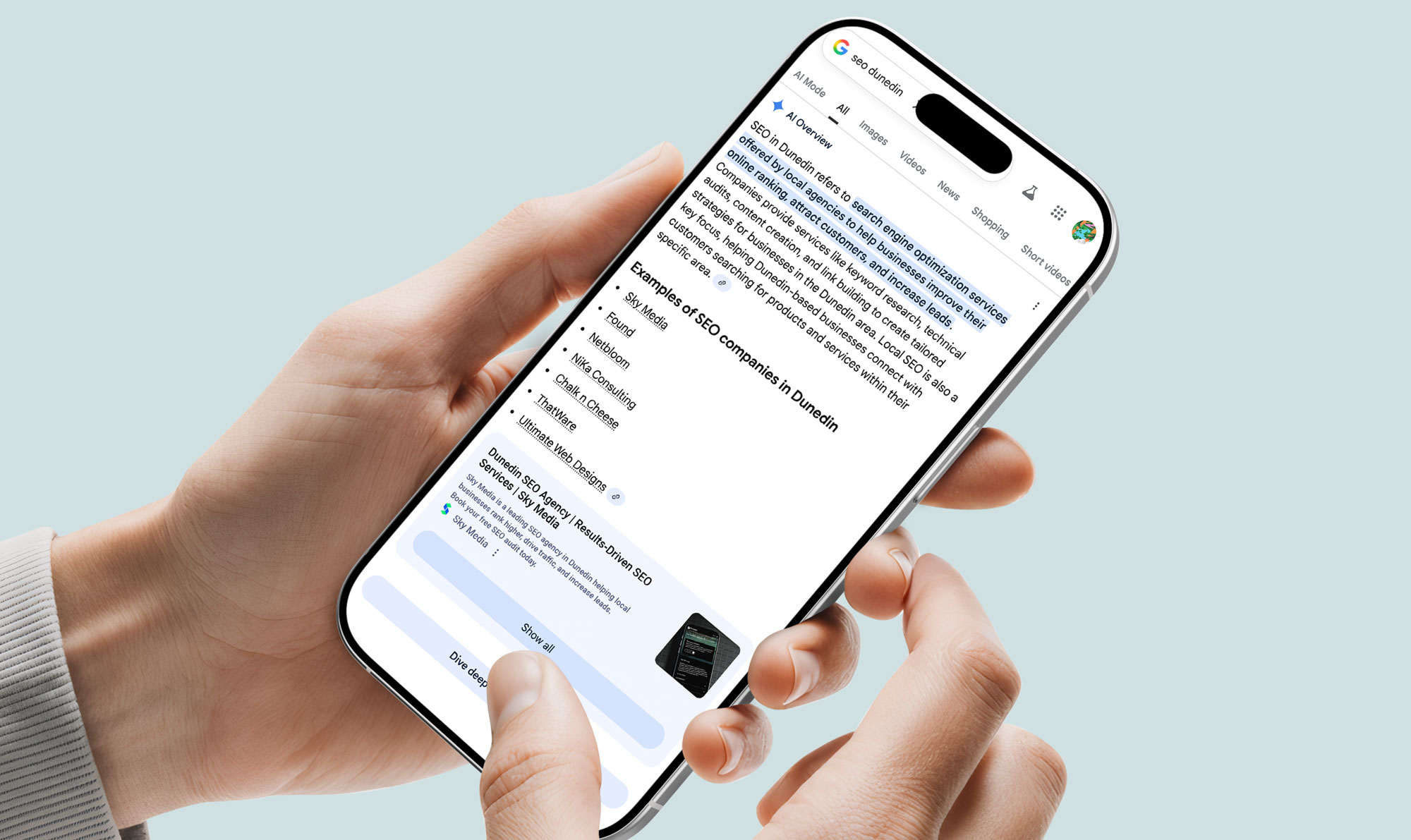
Search is being reshaped by AI experiences. Google has publicly discussed AI-powered experiences like AI Overviews and how they change how people interact with results.

  1. Two important implications for local businesses:
  2. Some users will get answers without clicking as often

Being the trusted local entity becomes even more valuable

Industry studies have observed click-through changes on queries that show AI features (results vary by query type), which is a reminder that relying on “ten blue links” alone is risky.

So what do you do?

  • Double down on your Google Business Profile completeness and accuracy
  • Strengthen reviews and reputation signals
  • Publish clear “proof” content (case studies, FAQs, service explanations)
  • Make it easy for searchers to take action without thinking (call buttons, booking, quote forms)

In a world where attention is fragmented, clarity wins.

8. Turn Local SEO into a system (not a one-off project)

Big brands can spend their way into visibility. Small businesses win by being consistent.

Here’s a simple monthly routine that compounds:

Weekly (15 minutes):

  • Reply to new reviews
  • Add 1–2 photos to GBP (real work, team, before/after)
  • Check for incorrect GBP edits

Monthly (60–90 minutes):

  • Publish one helpful piece of local content (FAQ post, project spotlight, “what it costs”, “how it works”)
  • Audit your top service pages: do they still match how customers search?
  • Look at GBP insights + basic lead tracking (calls, forms)

Quarterly:

  • Add or refresh a key service page
  • Do a citation check (especially after moving address or changing phone numbers)
  • Run a lightweight competitor scan: what are they doing that you’re not?

The bottom line: small businesses can absolutely win local search in 2026

Local SEO isn’t about being the biggest. It’s about being the best match for the person searching nearby — and proving it with consistent signals:

  • Clear categories and services (relevance)
  • Strong reputation and real-world trust (prominence)
  • Accurate location/service area info (distance + legitimacy)

If you build those foundations, small businesses can compete with — and often beat — big brands because you can be more specific, more personal, and more locally trusted.

If you’d like, Sky Media can turn this into a practical plan for your business: a cleaned-up Google Business Profile, a tighter service-page structure, and a simple content system that keeps visibility growing month by month.

Get a Local SEO strategy that actually fits your business.

No guesswork. No generic checklists. Just a clear plan built around how your customers search — and how Google ranks local results in 2026. Talk to Sky Media about Local SEO.
Why a Fresh Website is Your #1 SEO Tool

Why Your “Set and Forget” Website is Hurting Your Business

By SEO, Web Design

You launched your website years ago. It looked great, showed off your services, and you hoped it would bring in customers. Then life and the day-to-day of running your business took over. Your website became that project you finished, and you haven’t touched it since—a digital “set and forget.”

Here’s the hard truth: that approach is now actively working against you. In the eyes of both Google and your potential customers, a static, outdated website signals a business that is no longer active, relevant, or trustworthy.

Why a Fresh Website is Your #1 SEO Tool

Think of SEO not as a one-time technical fix, but as an ongoing conversation with both your customers and Google. Updating your website regularly is how you keep that conversation lively, relevant, and successful. Let’s break down exactly why this is so critical, and how we’ve helped other Kiwi businesses transform their results by breaking the “set and forget” habit.

1. Google Rewards Freshness: The Algorithm Loves an Active Site

At its core, Google’s mission is to provide the best, most relevant, and most current answer to a searcher’s question. Which result do you think it will prefer when someone searches for “campervan hire NZ 2026” or “sustainable home builders Auckland”?

  • A website with “Latest News” from 2020.
  • A site with a regularly updated blog, fresh customer testimonials, and updated service pages reflecting current offers.

The answer is obvious. Google has a built-in “freshness factor.” By regularly updating your site, you send clear signals that it’s a living, active source of information. This can lead directly to a rankings boost, especially for time-sensitive or competitive searches.

In simple terms: A regularly updated website is like a shop with its lights on and fresh stock in the window. A stale site is like a shop with dusty shelves—people assume it’s closed or doesn’t care.

2. It’s Your Chance to Answer New Customer Questions

Your business evolves. The questions your customers ask evolve, too. A few years ago, people might have searched for “home builder.” Now, they’re looking for “energy-efficient passive home design” or “campervan hire with bike racks.”

If your website only has the old content, you’re invisible to people asking new questions. Regular updates allow you to:

  • Create new pages or blog posts that target these emerging trends and keywords.
  • Expand your service pages to reflect new offerings or FAQs you hear daily.
  • Showcase recent work to prove you’re actively excelling in your field.

Every new, relevant page is another front door to your business online. More doors mean more opportunities for customers to find you.

3. Updating Old Content: Your Secret SEO Weapon

Creating new content is great, but one of the most powerful strategies is updating and republishing what you already have.

That service page or blog post from a few years ago that used to get traffic? It might be slipping because it’s outdated. The process is simple:

  • Find it: Identify pages with potential that are now underperforming.
  • Refresh it: Update statistics, add new insights, include recent case studies or testimonials, and improve the images.
  • Republish it: Change the “last updated” date and share it again.

Why does this work? You’re taking a page that already has some SEO authority and making it 10x more valuable. It’s like renovating a well-located house instead of building on a new plot—the results are often faster and more dramatic.

Real-World Transformations: From Static to Strategic

These concepts might sound abstract, but their impact is incredibly concrete. Let’s look at two recent Sky Media clients and the tangible results of moving from a “set and forget” to an “always fresh” mindset.

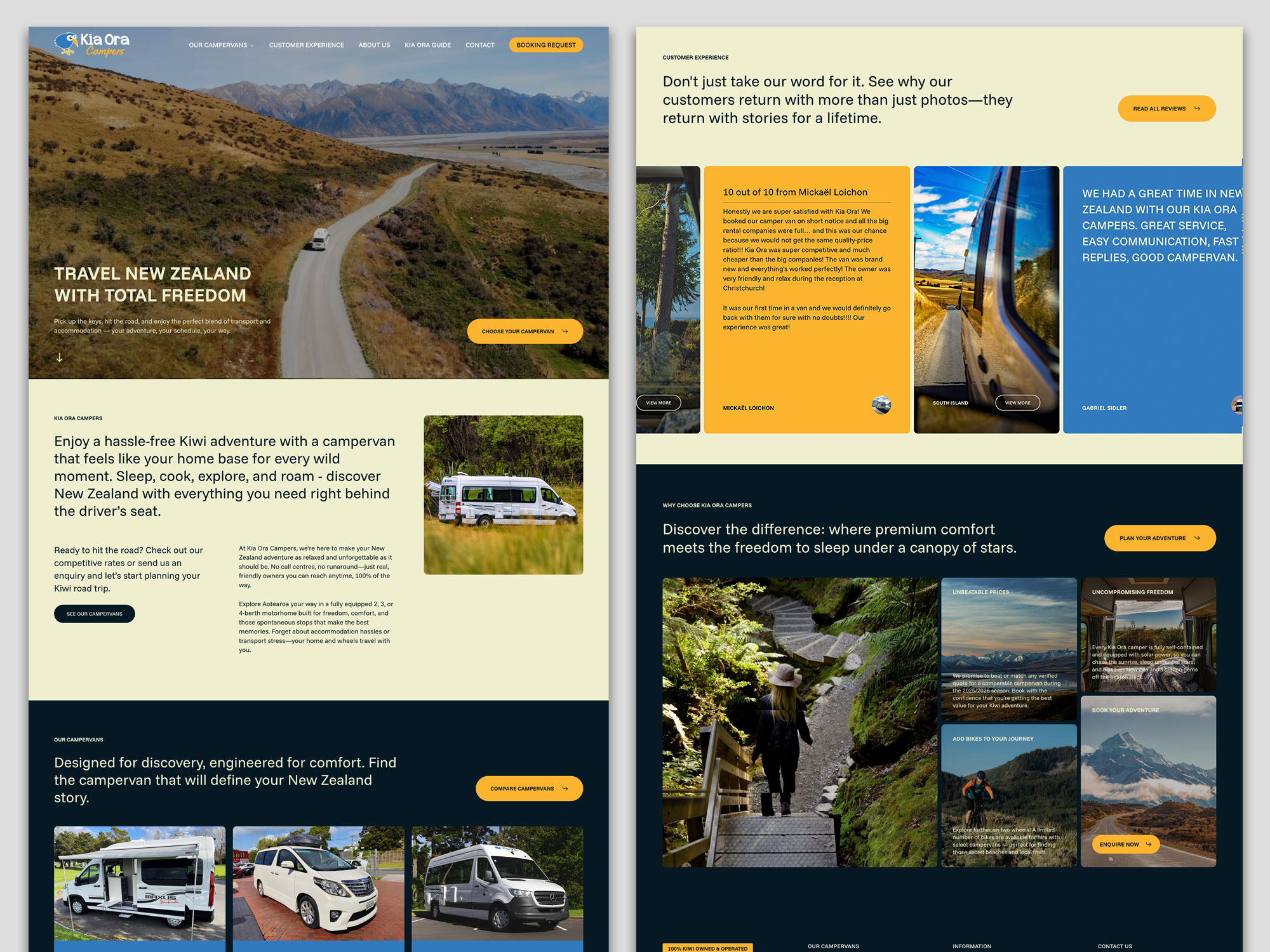
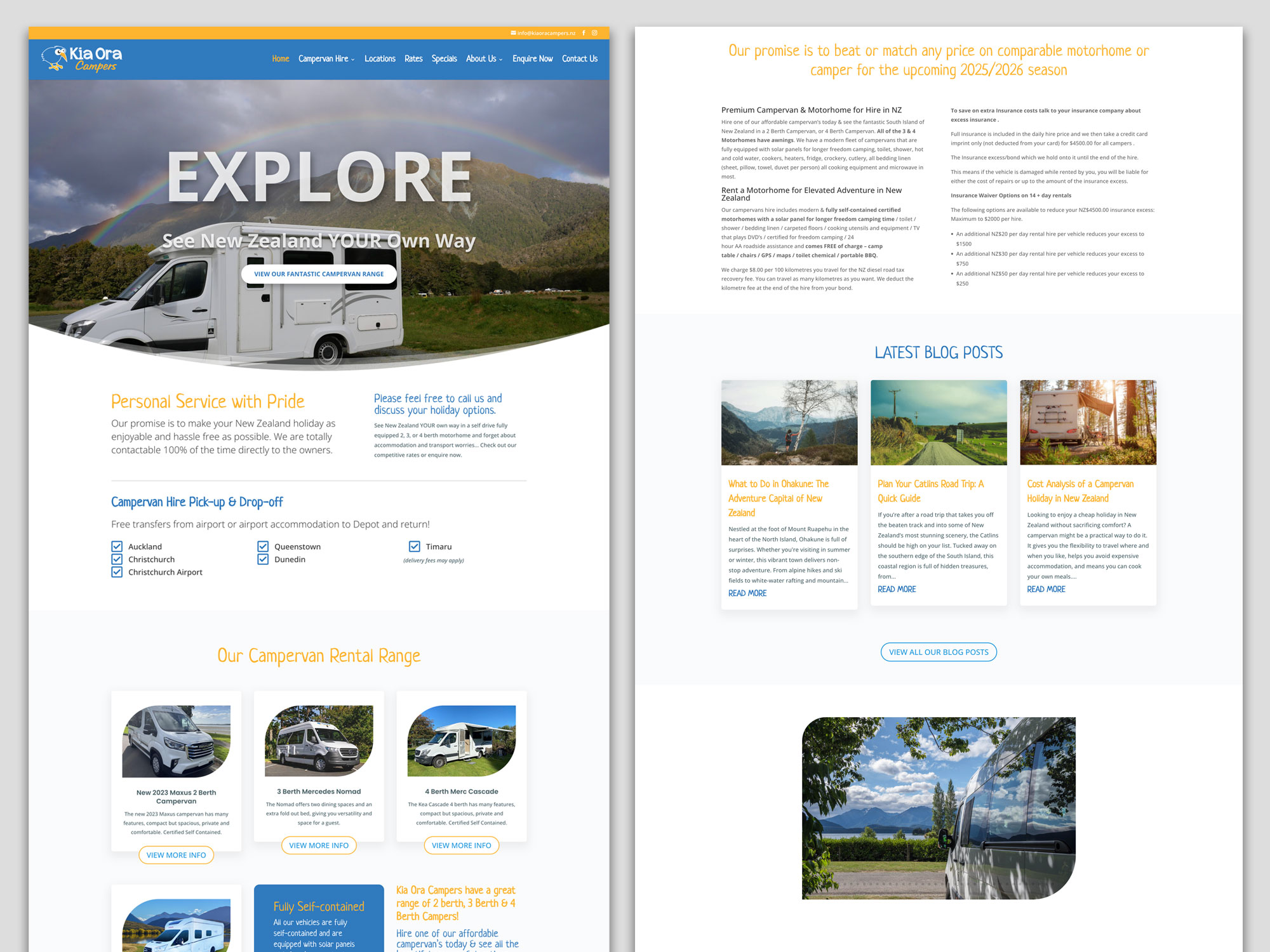
Case Study 1: Kia Ora Campers – Driving Online Bookings Off the Chart

The ‘Before’ website: A Static Fleet List: The original Kia Ora Campers site functioned primarily as an online brochure. It listed vehicles and contact details, but the blog was hard to read, and key information for travellers (like detailed insurance explanations or current travel tips) wasn’t easily accessible. The site wasn’t actively working to answer the myriad questions potential renters have when planning a big trip.

Kia Ora Campers Website Before

The ‘After’ Strategy – Becoming a Travel Resource: We worked with Kia Ora Campers to shift their site from a brochure to a comprehensive travel hub. The strategy centred on consistent, valuable content updates:

  • A Visual, Editorial-Standard Blog: Moving beyond basic posts, we developed a blog with a magazine-grade design. Featuring compelling layouts, high-quality imagery, and scannable sections
  • Transparent & Detailed Content: Key pages were expanded with clear, reassuring details on insurance, bond processes, and what “fully self-contained” truly means for freedom camping.
  • Fresh Social Proof: The integration of recent, detailed customer reviews builds immense trust.

The Result: The site is no longer just a list of vans; it’s a trusted planning tool. By consistently publishing content that targets what travellers are searching for.

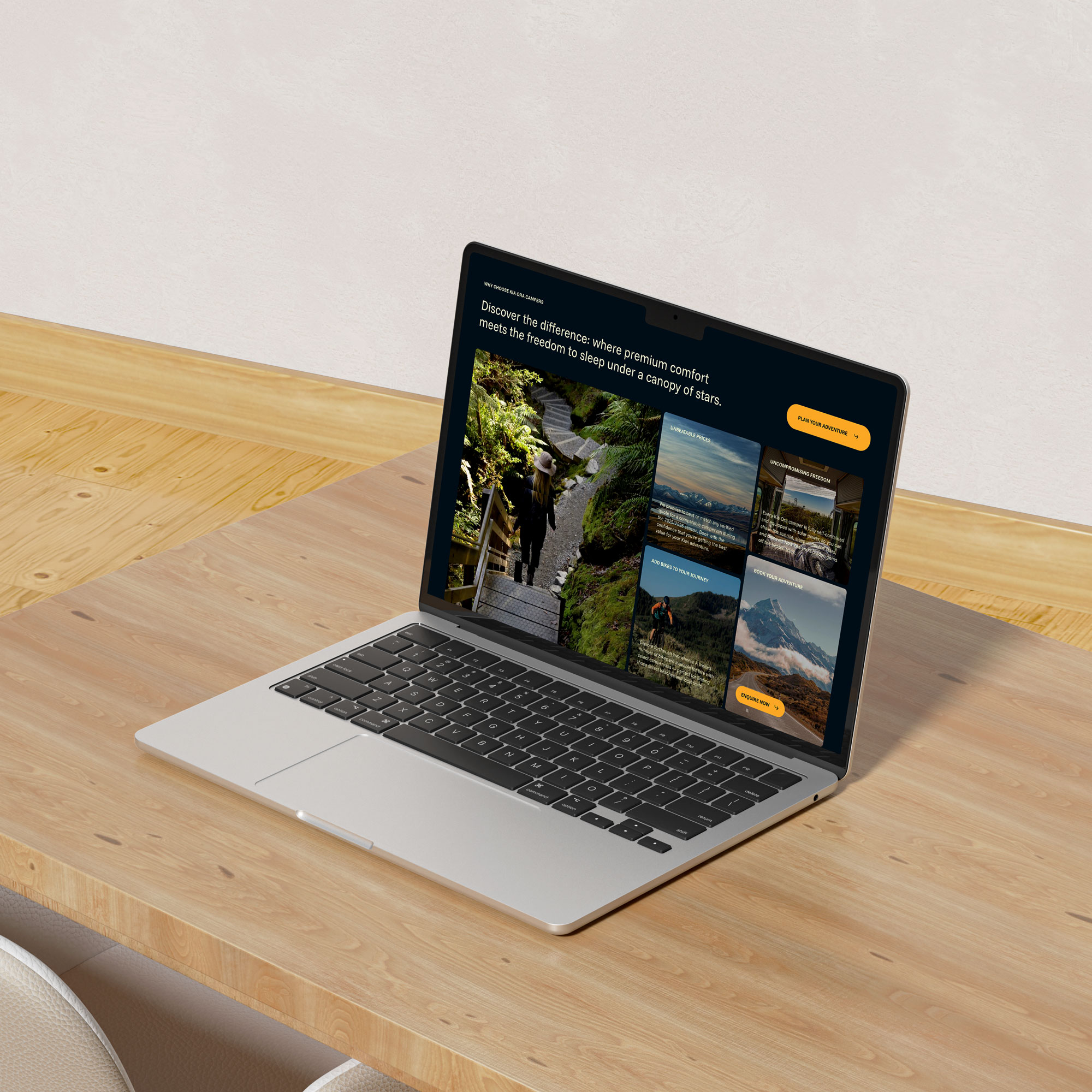
Kia Ora Campers Website After

Case Study 2: Integrated Homes – Building Authority in a Competitive Market

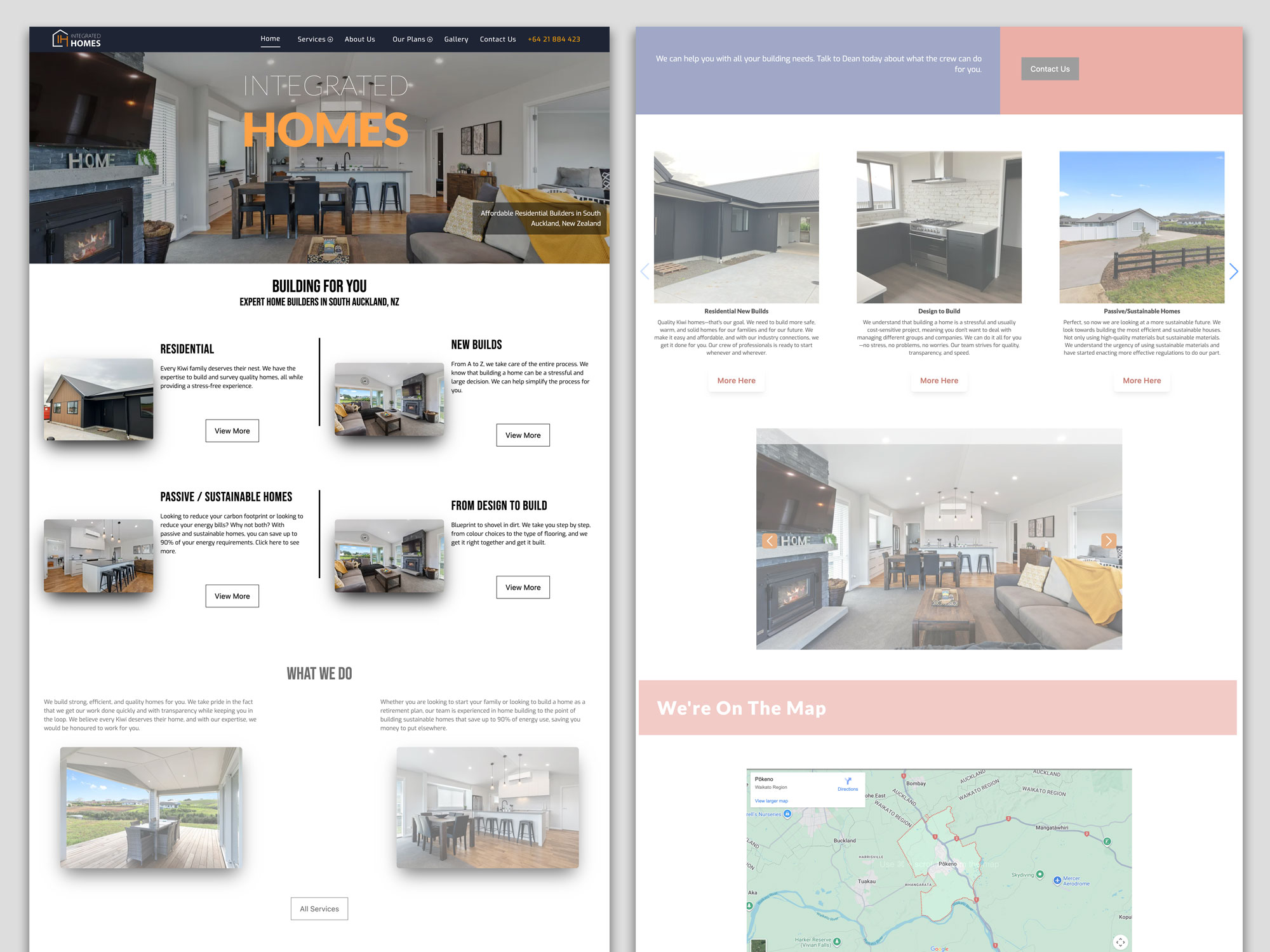
The ‘Before’ – A Generic Builder Site: Integrated Homes’ original site contained the essential information—they built quality homes—but it struggled to stand out in the crowded Auckland building market. The messaging was broad, and the site lacked the specific, expertise-driven content needed to attract clients looking for more than just a builder.

Integrated Homes Website Before

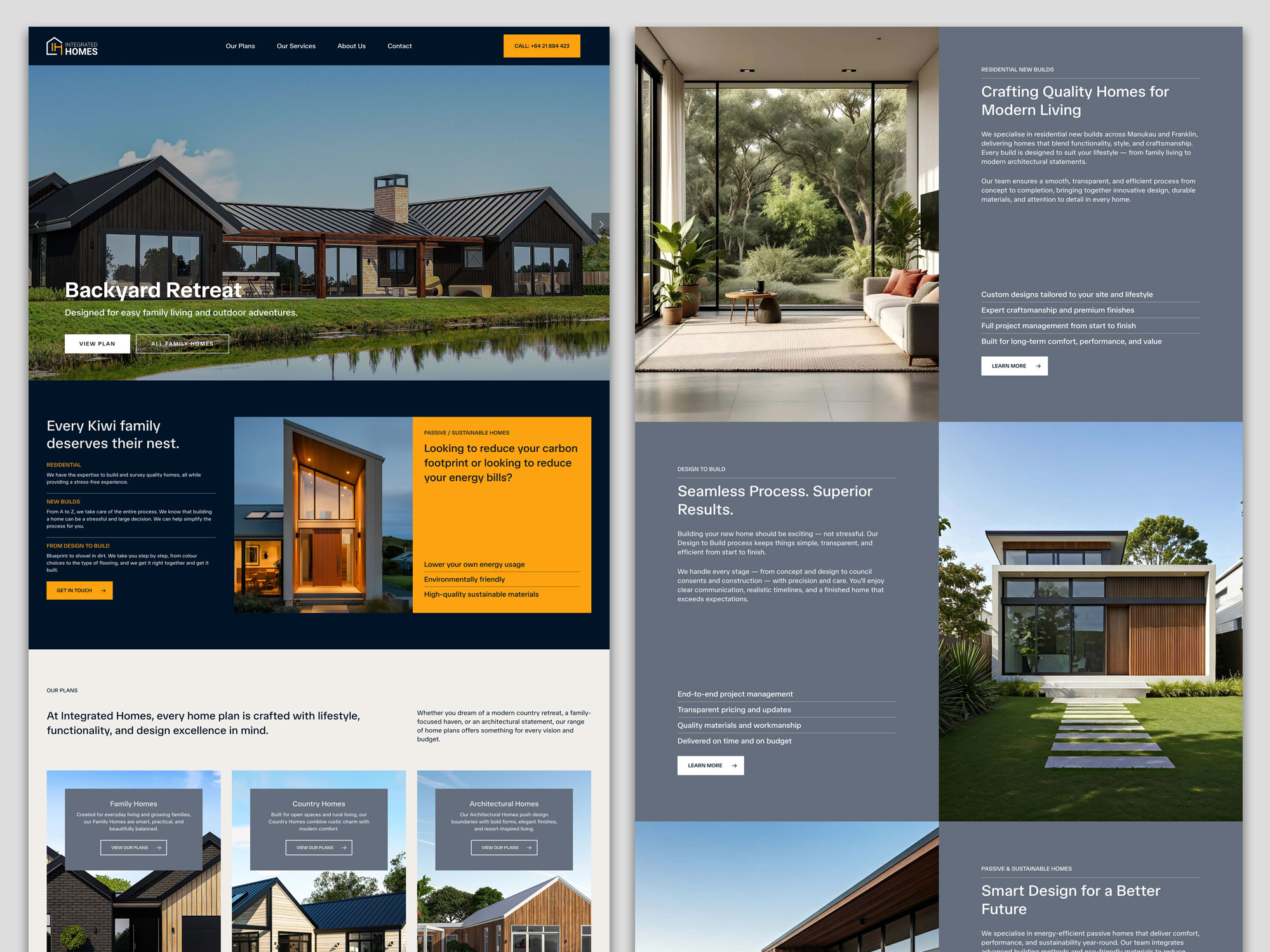
The ‘After’ Strategy – Owning a Niche with Expertise: Our focus was on positioning Integrated Homes as specialists, not generalists. This was achieved through targeted updates and content that showcased deep knowledge:

  • Highlighting Specialisations: We worked to clearly define and promote their service pillars, especially “Passive / Sustainable Homes,” moving it from a bullet point to a key differentiator. The content explains the benefits (like “saving up to 90% of your energy requirements”) in clear, compelling language.
  • Project-Focused Storytelling: The site now uses its house plans more effectively, presenting homes like “Your Own Elmshade Resort” or “Your Brick solid Windermere Home.” This tells a story of craftsmanship and results, not just showing pictures.
  • Building Trust through Transparency: Pages were updated to prominently feature certifications (LBP, NZCB Halo), clearly stating “Our team prides itself on our experience and quality craftsmanship.”

The Result: By consistently emphasising their specialised expertise in sustainable building and showcasing completed projects with narrative depth, Integrated Homes is able to attract clients who are specifically looking for their skill set.

Integrated Homes Website After

4. Building Trust and Authority: The Human Element

Regular updates build what Google calls EEAT (Experience, Expertise, Authoritativeness, Trustworthiness). This is shown through:

  • Fresh testimonials and case studies: Proof you’re doing great work now (as seen in both case studies above).
  • Industry commentary: Showing you’re engaged and knowledgeable.
  • Updated “About Us” and credentials: Like Integrated Homes’ builder certifications.
  • An active, helpful blog: Like Kia Ora’s travel guides, which build authority before a customer even picks up the phone.

A static website erodes trust. An active, updated website builds it with every visit.

5. Technical Health: Keeping the Digital Lights On

Websites are built on software that needs updates for security, speed, and mobile-friendliness. An outdated backend is a major risk and can slow your site down, causing both Google and users to bounce away. Regular maintenance is the non-negotiable digital equivalent of a Warrant of Fitness for your online presence.

“But I’m Too Busy Running My Business!” Your Action Plan

This is the most valid concern. You’re an expert in building or hospitality, not in content marketing. The key is to start small and be consistent, or partner with experts (like us) to handle it for you.

  1. Audit Your Key Pages: Pick your top 3 service pages. Are the descriptions, prices, and benefits accurate and compelling? Update them first.
  2. Add Fresh Proof: Upload your two most recent client testimonials or project photos this month.
  3. Revive One Old Piece: Find one blog post or page that has good history but old info. Spend an hour updating it.
  4. Schedule Time: Block out 90 minutes in your calendar next month to repeat this process. Consistency is everything.
  5. Talk to Your Experts: This is what we do at Sky Media. We become an extension of your team, creating and implementing a manageable, strategic update plan that turns your website from a static cost into your hardest-working business development tool.

In conclusion, your website is the heart of your digital presence. Just like your physical business needs ongoing care, your website needs regular attention to thrive. By committing to regular updates, you’re ensuring your business remains visible, relevant, and trusted. The transformation for Kia Ora Campers and Integrated Homes wasn’t magic—it was the systematic application of treating their website as the living, growing asset it truly is.

Ready to move from “set and forget” to “always growing”? Contact the Sky Media team today for a free, no-obligation website audit. Let’s build a plan that works for your business.

Checklist showing the connection between UX design and SEO success

Is Your Website’s Design Hurting Your Google Ranking? Here’s How to Tell.

By Digital Marketing, SEO

When most business owners think about getting found online, they think of Search Engine Optimisation (SEO)—keywords, backlinks, and content. And when they think about their website, they focus on design: colours, layouts, and beautiful images.

It’s common to see these as two separate projects: one for the marketing team and one for the web designer. But what if we told you that this separation is the very thing holding your website back?

Checklist showing the connection between UX design and SEO success

The truth is, your website’s design and its SEO performance are deeply intertwined. Google doesn’t just see a collection of pretty pictures and text. It “experiences” your website much like a human visitor does. A well-designed website doesn’t just look good; it functions in a way that search engines love.

In this post, we’ll demystify the technical jargon and show you, the business owner, how the core elements of your website’s design directly affect your search engine rankings. Understanding this connection is the first step to building a website that not only wins customers but also wins good rankings in Google search.

1. Site Architecture & Navigation: Building a Roadmap for Users and Google

Think of your website like a physical store. If a customer walks in and can’t find what they’re looking for because the aisles are a maze, they’ll leave frustrated. The same goes for your website.

Site architecture is the structure and hierarchy of your website’s pages. A clean, logical structure is crucial for both user experience (UX) and SEO.

How it Affects Users: Visitors should be able to find any piece of information within three clicks. A clear menu, a logical flow from general (Home > Services) to specific (Services > Renovations), and a helpful footer are essential.

How it Affects SEO: Google’s bots (called “crawlers”) navigate your website by following links. A messy, deep, or illogical structure makes it hard for them to discover and index all your important pages. If Google can’t find a page, it can’t rank it.

Actionable Tip: Create a simple, flat site structure. Use broad categories in your main navigation and use internal links to connect related pages (e.g., link from your “Renovations” service page to your “Completed Projects” page).

2. Mobile-First Design: No Longer an Option, but a Necessity

You’ve likely heard that your website needs to be mobile-friendly. But the concept has evolved. We’re now in the era of “mobile-first indexing”.

This means that Google primarily uses the mobile version of your website’s content for indexing and ranking. If your desktop site is perfect but your mobile site is slow, clunky, or poorly formatted, you are at a significant ranking disadvantage.

How it Affects Users: Over half of all web traffic comes from mobile devices. A non-responsive design forces users to pinch, zoom, and scroll horizontally, leading to a terrible experience and a high bounce rate (people leaving your site quickly).

How it Affects SEO: Google is explicitly prioritising the mobile experience. A slow or unresponsive mobile site will be penalised in search results. Furthermore, a poor mobile experience increases your bounce rate, which is a negative ranking signal.

Actionable Tip: Use Google’s free Mobile-Friendly Test tool. Ensure your website uses a “responsive” design, meaning it automatically adapts its layout to fit any screen size.

3. Page Speed & Performance: The Need for Speed

In our fast-paced world, patience for slow-loading websites is zero. A delay of just a few seconds can kill your conversions. But speed is also a direct Google ranking factor.

How it Affects Users: Slow loading times lead to frustration and abandonment. Think of it as a slow-loading checkout line in a supermarket—people will simply leave their cart and go elsewhere.

How it Affects SEO: Google’s Core Web Vitals are a set of specific metrics related to speed, responsiveness, and visual stability. Websites that perform well on these metrics are rewarded with better rankings. A fast site also gets crawled more efficiently by Google’s bots, meaning your new content can be indexed faster.

Actionable Tip: Compress and optimise your images (don’t upload massive, high-res files directly from your camera). Work with your developer to minimise code and leverage browser caching. Tools like Google PageSpeed Insights can give you a detailed report.

4. Content Layout & Readability: Making Your Content Scannable

You could have the most insightful, valuable content on the internet, but if it’s presented as a giant, intimidating “wall of text,” no one will read it—including Google.

How it Affects Users: Online readers don’t read word-for-word; they scan. They look for headings, bullet points, bold text, and short paragraphs. A clean, scannable layout respects the user’s time and helps them find the information they need quickly, keeping them on the page longer.

How it Affects SEO: When users stay on your page (a metric known as “dwell time”), it signals to Google that your content is valuable. Furthermore, using proper HTML heading tags (H1, H2, H3) to structure your content acts as a roadmap for search engines, helping them understand the context and hierarchy of your information.

Actionable Tip: Break up your text! Use a clear H1 for the main title, H2s for main section headings, and H3s for sub-sections. Employ bulleted lists, bold key phrases, and keep paragraphs to 2-3 sentences.

5. Secure & Accessible Website (HTTPS): The Foundation of Trust

Security is no longer just for E-Commerce sites handling payments. It’s a basic requirement for every website.

How it Affects Users: A secure site (indicated by a padlock icon in the address bar) assures visitors that their connection to your site is encrypted and safe. This builds trust, which is essential for any business hoping to generate leads or sales.

How it Affects SEO: Google has confirmed that HTTPS is a lightweight ranking signal. More importantly, browsers like Chrome now explicitly mark non-HTTPS sites as “Not Secure,” which can severely damage your credibility and increase your bounce rate.

Actionable Tip: Ensure your website has an SSL certificate installed, meaning your URL begins with https:// instead of http://.

6. Image Optimisation: The Hidden Power of Pictures

Images make your website visually engaging, but if not handled correctly, they can be a major drag on performance and a missed SEO opportunity.

How it Affects Users: Unoptimised, large images slow down your page speed, creating a poor user experience as discussed earlier.

How it Affects SEO: Slow loading is an SEO negative. However, properly optimised images present a fantastic SEO opportunity through Alt Text. Alt text is a written description of an image that is read aloud by screen readers for the visually impaired and is also crawled by search engines. It helps your images appear in Google Image Search, driving additional traffic.

Actionable Tip: Always compress images before uploading. When adding an image, describe it concisely in the alt text field, using relevant keywords naturally (e.g., alt=”Bathroom renovation before and after showing outdated pink tiles transformed into a modern walk-in shower” instead of just “image12345.jpg”).

7. Internal Linking: Weaving Your Website Together

Internal links are hyperlinks that point to another page on your own website. They are the glue that holds your site architecture together.

How it Affects Users: Internal links help visitors discover more relevant content, keeping them engaged and on your site longer. For example, you can link from a blog post about your new completed construction project to your service page for “New Builds”.

How it Affects SEO: Internal links help spread “link equity” (ranking power) throughout your site. They establish a hierarchy on your website, showing Google which pages you deem most important. They also help crawlers discover new pages more efficiently.

Actionable Tip: Don’t just use “click here” as link text. Use descriptive anchor text that tells the user and Google what the linked page is about (e.g., “Learn more about our renovation services”).

Bringing It All Together: The Synergy of Design and SEO

As you can see, web design is not a superficial layer on top of your SEO strategy. The elements we’ve discussed, from site structure to image optimisation, are fundamental to how both users and search engines interact with your website.

A beautiful website that is slow, confusing, and insecure will fail to rank and fail to convert visitors. Conversely, a technically perfect but ugly and hard-to-use website will also struggle to meet business goals.

The goal is a harmonious balance: a website that is visually appealing, intuitively easy to use, and built on a technically sound foundation. This is the sweet spot where user experience and search engine optimisation meet, creating a powerful asset that drives sustainable growth for your business.

Conclusion: Your Website is Your Hard-Working Employee

Think of your website as your business’s hard-working, 24/7 sales and marketing employee. For this employee to perform at its best, it needs the right tools and environment. The design elements we’ve covered are exactly that – the tools that allow your website to communicate effectively, build trust, and provide a seamless experience for every visitor.

By prioritising an SEO-friendly design from the very beginning, you’re not just building a website; you’re building a powerful engine for online visibility and business growth.

Is your current website designed for success? The team at Sky Media specialises in creating beautiful, high-performing websites that are built to rank. Contact us today for a free, no-obligation website and SEO audit to see how you can improve your online presence.

A business owner looking confidently at a screen displaying AI search results, showing how to adapt and succeed in the new digital landscape.

The New Rules of SEO: How to Win in the Age of AI Search

By SEO

If you’ve used Google lately, you might have noticed something different. The classic blue links are still there, but now you might also see a neat, conversational answer right at the top of the page, summarising exactly what you were looking for.

A business owner looking confidently at a screen displaying AI search results, showing how to adapt and succeed in the new digital landscape.

This is AI Search in action. Tech giants like Google and Microsoft have begun weaving powerful artificial intelligence directly into their search engines. Instead of just getting a list of links to click, you’re getting a direct, paragraph-style answer.

It’s a fundamental shift in how people find information online. And if your business relies on being found by customers through search, you’re probably wondering: “What does this mean for my website? Do I need to change my marketing strategy?”

The short answer is: the game is changing, but the goal remains the same. Let’s break down what’s happening in plain English.

What Exactly is AI Search?

Think of traditional search like a massive, incredibly fast librarian. You ask a question, and the librarian points you to the ten most relevant books on the shelf. You still have to pull the books off the shelf and find the exact chapter yourself.

AI Search, on the other hand, is like that librarian who has read every single book in the library. You ask your question, and she immediately gives you a concise, well-worded summary of the answer, pulling the best information from all those books. She’ll still show you the books she used, but you might not need to check them out anymore.

This “summary” is called an AI Overview or AI-Generated Answer. It’s designed to save you time by giving you the essence of the answer right away.

The AI does the 'searching' for you, pulling key info from top websites to provide an instant answer.

So, What Does This Mean for Your Business and SEO?

For years, the goal of Search Engine Optimisation (SEO) has been to get your website to rank as the #1 result. The thinking was, “If I’m at the top, I’ll get the click.” With AI providing the answer upfront, the number of clicks to regular websites could decrease for some types of searches.

This might sound alarming, but it’s not a reason to panic. It’s a reason to adapt. Here’s how the focus is shifting at our agency:

1. The “Click” is Becoming a Deeper Commitment

If the AI gives a basic answer, users will only click through if they want more—more detail, more depth, or a different format. This means your content needs to be more valuable than the AI’s summary.

Our Approach: We’re focusing even more on creating comprehensive, “deep-dive” content that an AI summary can’t fully capture. Think detailed service pages, unique project pages, interactive tools, and compelling videos that provide a richer experience.

2. It’s No Longer Just About Keywords, It’s About Being the “Expert Source”

The AI pulls information from what it considers the most trustworthy and authoritative sources. If your website is seen as a superficial or unreliable source, it won’t be featured in these answers.

Our Approach: We are doubling down on E-E-A-T (Experience, Expertise, Authoritativeness, and Trustworthiness). This means clearly showcasing your business’s real-world experience, the credentials of your team, and building a reputation as a leader in your field. Customer reviews and testimonials are more important than ever.

3. The “How-To” and “Local” Searches are Golden Opportunities

Ask an AI “How do I fix a leaking tap?” and it can give you the steps. But you know what it can’t do? Send a local plumber to your house.
Ask “What’s the best Italian restaurant near me?” and the AI might list a few, but it can’t capture the unique atmosphere and menu highlights that make your restaurant the best choice.

Our Approach: We are hyper-focused on optimising your local SEO and creating content that showcases what makes your business uniquely yours. Up-to-date business listings, photos of your team and location, and content that answers very specific local questions (e.g., “Where to get the best local builder in [Your City]?”) will be crucial.

4. Your Website’s User Experience is Now a Top Ranking Factor

If a user does click from an AI answer to your site, but it loads slowly, is hard to read on a phone, or is confusing to navigate, they will click the “back” button instantly. Search engines will notice this negative signal.

Our Approach: We are prioritising technical SEO and user experience (UX) more than ever. This includes ensuring your site is blazing fast, mobile-friendly, easy to navigate, and provides a seamless journey from question to answer to conversion.

The Sky Media Promise: We’re Not Just Keeping Up, We’re Leading the Way

The introduction of AI Search isn’t the end of SEO; it’s its evolution. It’s pushing us to create better, more helpful, and more authentic online experiences for your customers.

At Sky Media, we see this as an exciting opportunity. It separates businesses that are just “on the web” from those that truly provide value. Our strategies are already adapting to ensure your business doesn’t just survive this change, but thrives in it.

Ready to future-proof your online presence? Let’s talk about building a website and content strategy that both Google’s AI and your customers will love. Contact Sky Media today for a Free Consultation.

SEO-friendly website design with fast loading speed and mobile optimisation

The Cost of Cheap Web Design: Why Investing in SEO-Friendly Websites Pays Off

By SEO, Web Design

Every business owner loves a bargain. When searching for affordable web design in NZ, you’ll quickly find countless freelancers and overseas agencies promising a complete website for just a few hundred dollars. At first glance, this sounds like a smart way to save money — after all, your business just needs a website online, right?

SEO-friendly website design with fast loading speed and mobile optimisation

Why “Affordable” Doesn’t Always Mean Cost-Effective

The problem is that cheap websites often cut corners. They rely on generic templates, bloated code, and outdated practices. While you may save upfront, you’ll likely face slow loading speeds, limited flexibility, poor mobile performance, and expensive fixes later on.

In the digital space, “cheap” almost always ends up being expensive.

The Role of SEO in Modern Web Design

Web design is no longer just about how a site looks — it’s about how it performs. A modern website needs to be built with SEO in mind from day one. Why? Because search engines like Google are the gatekeepers to your customers.

Google ranks websites based on technical quality, mobile responsiveness, Core Web Vitals, and how well a site is structured. If your website isn’t SEO-friendly, you’ll struggle to appear in search results, no matter how nice your site looks.

This is why at Sky Media, we design websites that are not only visually appealing but also search engine optimised. It’s a long-term investment that ensures your website works for your business, not against it.

Hidden Costs of Cheap Web Design

A cheap website may seem like a quick win, but the hidden costs add up fast. Some of the most common pitfalls include:

  • Poor User Experience: Visitors land on your site only to find it slow, hard to navigate, or not mobile-friendly. This leads to high bounce rates and lost customers.
  • Lack of SEO Optimisation: Most budget sites don’t come with SEO best practices built in. Without proper on-page optimisation, you’ll struggle to rank on Google.
  • Security Issues: Many cheap providers use outdated plugins and free themes, making your site vulnerable to hackers. Fixing security breaches is far more expensive than prevention.
  • Constant Redesigns: If your site doesn’t scale with your business, you’ll need a complete rebuild every couple of years, multiplying costs.

In short, that “affordable” web design could cost your business thousands in lost leads, reduced trust, and ongoing maintenance.

Why Investing in SEO-Friendly Web Design Pays Off

Unlike a template website that’s designed just to look good, an SEO-friendly website is built to generate business results. Here’s why the investment pays off:

  • Better Google Rankings. Higher visibility means more people find you organically, without paying for ads.
  • More Organic Traffic. With strong SEO foundations, your website becomes a steady stream of new leads.
  • Higher Conversions. Clean design, fast load times, and good UX make visitors more likely to contact you.
  • Long-Term ROI. While you may pay more upfront, a properly optimised website works for years and reduces the need for constant redesigns.

For example, many businesses that invest in our SEO packages in Auckland find that within months, their new website begins paying for itself by delivering consistent leads.

What to Look for in an SEO-Friendly Website

Not sure how to tell if a website is SEO-friendly? Here are the key features to look out for:

  • Clean Site Architecture: Organised menus and internal linking that help users (and Google) navigate your site.
  • Fast Load Times: Speed is critical — both for users and search rankings.
  • Mobile-First Design: With most NZ users browsing on mobile, your site must perform flawlessly on smaller screens.
  • Core Web Vitals: Meeting Google’s standards for speed, responsiveness, and visual stability.
  • On-Page SEO: Optimised meta titles, descriptions, headers, and image alt text.
  • WordPress SEO-Friendly Platform: Flexible, scalable, and easy to optimise as your business grows.

When you choose a provider, ask them to show examples of SEO-friendly builds. If they can’t explain how their designs support search engine rankings, that’s a red flag.

Modern SEO-friendly WordPress website for Geeves New Zealand

Modern SEO-friendly WordPress website for Geeves Scaffolding New Zealand.

Affordable Doesn’t Mean Cheap – The Sky Media Approach

At Sky Media, we understand that businesses want affordable web design in New Zealand without sacrificing quality. That’s why our approach is simple: deliver value, not shortcuts.

  • Transparent Pricing: We provide clear quotes so you know exactly what you’re paying for.
  • SEO Built-In: Every website we design comes optimised for search, ready to rank.
  • Flexible SEO Packages: From Auckland to Wellington and Christchurch, we tailor SEO packages that fit your budget and goals.

Affordable doesn’t have to mean cheap. It means getting a website that’s fairly priced, performs well, and grows with your business.

Final Thoughts – Invest Smart, Not Cheap

When it comes to your website, the cheapest option rarely pays off. A low-cost build may look fine at launch, but without SEO it won’t bring in traffic, leads, or sales. Over time, the hidden costs of cheap design — poor rankings, low conversions, constant fixes — can far outweigh the initial savings.

An SEO-friendly website is a smart investment. It’s the foundation of your online presence and a tool that drives long-term business growth.

If you’re serious about building a website that performs, don’t settle for the cheapest option. Invest in a partner who understands both web design and SEO packages in Auckland — and your website will pay for itself many times over.

SEO Costs in New Zealand: What You Should Pay in 2025

By SEO

Search Engine Optimisation (SEO) is one of the most powerful long-term growth strategies for Kiwi businesses. Whether you’re a start-up café in Ponsonby, a professional service in Wellington, or a construction company in Christchurch, SEO ensures your business is visible when people search online.

But one of the first questions most businesses ask is: “How much should I pay for SEO services?”

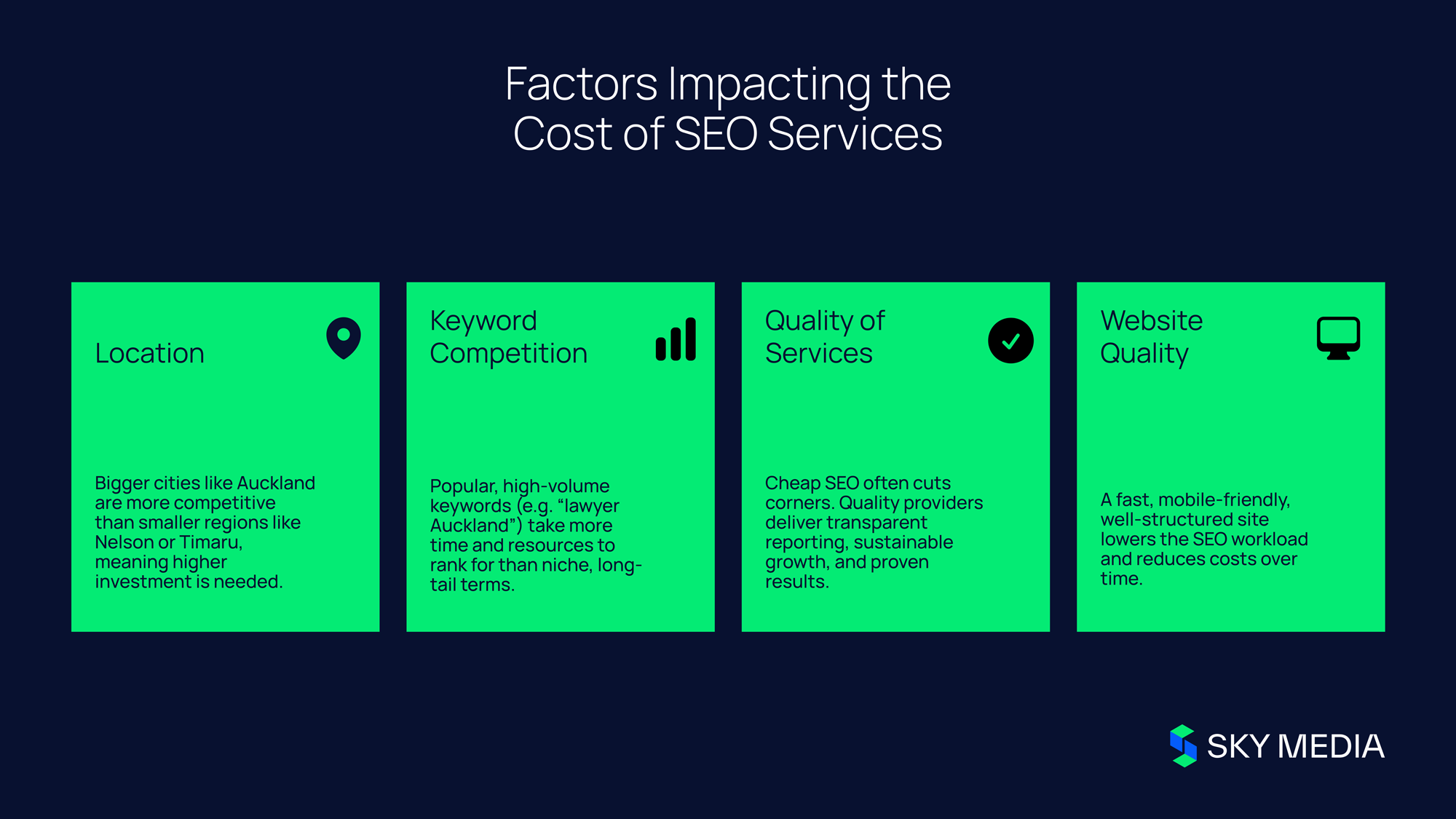
The answer depends on a mix of factors—your target location, the competitiveness of your keywords, the quality of service you’re choosing, and even how well your website has been designed. In this guide, we’ll unpack the key elements that influence SEO pricing in New Zealand, weaving in local examples (SEO Auckland, SEO Wellington, SEO Christchurch) and why pairing SEO with a trusted web design agency makes such a big difference.

1. The Scope of Your Target Market: Why Location Drives Cost

Not all locations are created equal when it comes to SEO competition.

  • SEO Auckland: New Zealand’s largest city is home to thousands of businesses across industries, all vying for visibility. Ranking for keywords like “construction company Auckland” or “Auckland plumber” is highly competitive and usually requires more content, stronger backlinks, and higher monthly investment.
  • SEO Wellington & SEO Christchurch: These cities are smaller but still competitive. Businesses in Lower Hutt, Petone, or Riccarton often face less competition than those in the CBD, meaning SEO budgets stretch further.
  • Regional SEO (Nelson, Timaru, Tauranga, Dunedin): In smaller markets, SEO is often more affordable. With fewer competitors targeting local keywords, smaller campaigns can achieve strong visibility with less investment.

NZ Stat Snapshot: 96% of Kiwis use the internet, and over 90% use Google as their preferred search engine. With nearly 88.5% of users browsing on mobile, local search visibility is no longer optional—it’s essential.

2. Keyword Difficulty & Competition: Understanding the Playing Field

Keywords are the foundation of SEO, but some are harder—and more expensive—to rank for.

  • High-competition keywords: Terms like “renovations Auckland” or “Christchurch lawyer” have hundreds of businesses competing for visibility. To win, you’ll need consistent blogging, link building, and advanced technical SEO.
  • Moderate competition: Keywords like “Wellington property management agency” or “Hamilton builders” may be easier to target, though still competitive in their industries.
  • Low-competition opportunities: Long-tail keywords such as “affordable plumbing company in Nelson” can deliver quick wins with less cost, while still driving valuable leads.

Smart SEO strategies combine short-term quick wins with long-term high-value goals.

3. The Quality of SEO Services: You Get What You Pay For

SEO services vary widely in quality, and that directly impacts cost.

  • Cheap SEO ($500–$1,200/month): Often limited to basic on-page fixes, minimal link building, and maybe a blog or two. This can work for very small businesses in low-competition areas, but results are limited.
  • Mid-tier SEO ($1,500–$6,000/month): Includes keyword strategy, on-page SEO for multiple pages, Google Business Profile optimisation, ongoing content creation, and consistent link building. Ideal for SMEs in larger NZ cities.
  • Enterprise SEO ($7,000–$10,000+/month): Comprehensive campaigns covering multiple locations nationwide, advanced content marketing, CRO testing, and high-authority backlinks. Necessary for nationwide brands and industries like law, finance, or real estate.

Sky Media’s packages reflect these tiers:

  • Sky Lift ($499+GST/month): Great for small local businesses with 5 keywords.
  • Sky Climb ($899+GST/month): Adds 10 keywords, local citations, and monthly blogs.
  • Sky Orbit ($2,900+GST/month): Expands to 50 national keywords, advanced link building, and monthly strategy calls.
  • Sky Galaxy ($4,500+GST/month): A full-scale national SEO campaign, custom content, and high-authority link outreach.

Tip: Always ask for transparent reporting, clear deliverables, and case studies. With Sky Media, 96% of clients stay with us because we prioritise results and accountability.

SEO services cost New Zealand Summary Inforagraphic

4. The Role of Web Design in SEO: Building on the Right Foundation

Even the best SEO strategy can’t succeed if your website isn’t built properly. Google rewards websites that are fast, mobile-friendly, and user-focused.

  • Mobile-first: Nearly 90% of NZ internet users browse on mobile. If your site isn’t responsive, you’ll lose rankings and customers.
  • Speed & Core Web Vitals: With NZ mobile internet averaging 91 Mbps and fixed broadband at 180 Mbps, users expect sites to load quickly. A slow site increases bounce rates and decreases conversions.
  • Clean structure: Search engines need a clear, logical hierarchy to crawl. Websites with messy coding, missing headings, or no internal linking require extra SEO work (and cost more to optimise).

That’s why many businesses choose a web design agency in Auckland, Wellington, or Christchurch that also offers SEO. A properly designed site reduces SEO costs in the long run and makes optimisation much easier.

Pro tip: If your website is outdated, consider a redesign before committing to a full SEO campaign. It may increase upfront costs but will save significantly on wasted SEO spend later.

5. Content & Link Building: The Fuel of SEO

SEO success hinges on two things: content and links.

  • Content: High-quality blog posts, guides, and service pages demonstrate expertise and keep your site fresh. Local content like “Top Cafés in Te Aro” or “Building Regulations in Christchurch” helps capture regional traffic.
  • Links: Backlinks are still one of Google’s strongest ranking signals. Getting high-authority links from NZ media outlets, directories, and partner businesses shows Google your site is trustworthy.

Example:

  • Sky Climb ($899+GST) includes monthly blogs and local citations.
  • Sky Orbit ($2,900+GST) scales to 4 blogs per month and advanced link building.

The more content and authority links you produce, the higher the costs—but the payoff is exponential in rankings and leads.

6. Why Cheap SEO Usually Costs More

Cheap SEO might seem appealing, but it often leads to:

  • Spammy backlinks that harm your domain authority
  • Minimal reporting with no clear ROI
  • Short-lived rankings that collapse with Google algorithm updates
  • Penalties that can tank your website visibility for months

On the other hand, investing in ethical, white-hat SEO pays off like compounding interest. The longer you run high-quality SEO, the stronger your authority, traffic, and lead flow become.

Final Thoughts: How Much Should You Pay?

There’s no universal price tag for SEO—it depends on your:

  • Location (SEO Auckland vs SEO Timaru)
  • Industry (finance vs hospitality)
  • Website quality (modern vs outdated)
  • Ambition (local presence vs nationwide dominance)

For some, $500–$900/month may be enough to establish a local foothold. For others targeting Auckland, Wellington, and Christchurch simultaneously, a realistic budget is $2,900–$4,500/month.

The key is choosing a partner who understands your goals and market. With proven success across SEO Auckland, SEO Wellington, and SEO Christchurch, and integrated web design services nationwide, Sky Media delivers SEO that builds businesses—not just rankings.

Local Wellington business benefiting from SEO visibility

How Local Wellington Businesses Can Win with SEO

By SEO

Running a business in Wellington is rewarding but competitive. From bustling cafés on Cuba Street to creative agencies in Te Aro and service providers across the Hutt Valley, standing out online is critical. Customers aren’t flipping through phone books anymore — they’re searching Google for everything from “best plumber in Wellington” to “digital marketing support near me.”

Local Wellington business benefiting from SEO visibility

This is where SEO Wellington comes in. Local search optimisation ensures your business is visible to the people who matter most: Wellingtonians ready to buy. Whether you run a boutique in the CBD or a professional service firm in Lower Hutt, working with a trusted Wellington SEO agency helps you attract more local customers, build credibility, and grow revenue.

Why SEO Matters for Wellington Businesses

Local businesses often rely on word-of-mouth and repeat clients, but in today’s digital world, those alone aren’t enough. Wellington customers expect to find answers online instantly, and if your business doesn’t appear on the first page, you risk losing them to a competitor who does.

For example, if someone searches for “accountant Wellington” or “wedding florist near me,” SEO ensures your business shows up in those local search results. Good SEO means more than rankings — it’s about being present at the exact moment your customer is looking for you.

A tailored Wellington SEO strategy can help cafés attract new patrons, tradies get more job bookings, and professional services secure higher-value clients. In a city with a strong mix of government, tech startups, and hospitality, visibility equals opportunity.

Wellington café owner using SEO strategy to attract customers

The Building Blocks of Local SEO

a) Optimising Google Business Profile

For Wellington businesses, your Google Business Profile is often the first impression customers see. Accurate opening hours, updated photos, and positive reviews can drive foot traffic just as much as your website.

b) Location-Focused Website Content

If your website speaks directly to Wellington customers, they’re more likely to engage. (Read more about: 4 Common Mistakes When Building a New Website or contact Sky Media web design team for a free website audit). A local builder might highlight projects in Johnsonville or Karori. A hair salon might showcase its presence in central Wellington. This builds trust and shows customers you’re part of their community.

c) Local Backlinks and Mentions

Being featured in Wellington Chamber of Commerce listings, local directories, or even news sites like Stuff Wellington signals to Google that you’re relevant to the city. These local “votes of confidence” strengthen your authority online.

d) Customer Reviews and Reputation

Encourage your customers to leave Google reviews mentioning your business and location. A review like “Best electrician in Wellington — fast and reliable” is both powerful social proof and a local SEO boost.

Benefits of Working with a Wellington SEO Agency

You could try managing SEO on your own, but a Wellington SEO agency brings experience and focus. Local agencies know the city, the competition, and how Wellingtonians search.

For example, a nationwide campaign might overlook the quirks of Wellington search trends — such as people in Petone searching differently from those in Thorndon. A dedicated SEO agency Wellington partner like Sky Media takes the time to understand your audience and tailor a strategy around it.

Most importantly, you’ll have ongoing support: monthly reports showing where you’re gaining traction, what keywords you’re ranking for, and how much new traffic you’re earning.

How Sky Media Helps Local Businesses Thrive

Sky Media has worked with businesses across New Zealand — from trades to retail and professional services — helping them grow through smart SEO. For Wellington clients, here’s what that looks like:

  • Custom Local SEO Audits – Identifying opportunities specific to the Wellington market.
  • Content That Speaks Local – Blogs, landing pages, and service descriptions that reflect how Wellingtonians actually search.
  • Website Optimisation – Fast, mobile-friendly websites that deliver a smooth user experience.
  • Local Backlink Building – Connections with Wellington-based organisations and websites.
  • Transparent Reporting – You’ll know how your rankings, leads, and calls are improving month by month.

Whether you’re running a café in Courtenay Place, a law firm in Lambton Quay, or a tradie business covering the wider region, Sky Media’s Wellington SEO solutions are built to grow with you.

SEO isn’t just about ranking — it’s about connecting with your community. Wellington businesses that invest in search optimisation build stronger visibility, attract loyal customers, and compete on more than just price.

When people search for services, you want your business to be the first they find. That’s where partnering with a Wellington SEO agency like Sky Media makes the difference. With a proven track record, deep local knowledge, and a commitment to measurable results, we’re here to help your business thrive in Wellington’s competitive market.

WordPress SEO specialist in New Zealand – Sky Media digital marketing agency

Why WordPress is the Best CMS Platform for SEO

By SEO, Web Design

When it comes to building a website that ranks well on Google and grows with your business, choosing the right Content Management System (CMS) is one of the most important decisions you can make. At Sky Media, we work with businesses across Auckland, Christchurch, and Wellington to create SEO-friendly websites — and we’ve tested nearly every CMS out there.

WordPress SEO specialist in New Zealand – Sky Media digital marketing agency

Our verdict? WordPress is hands-down the best platform for SEO.
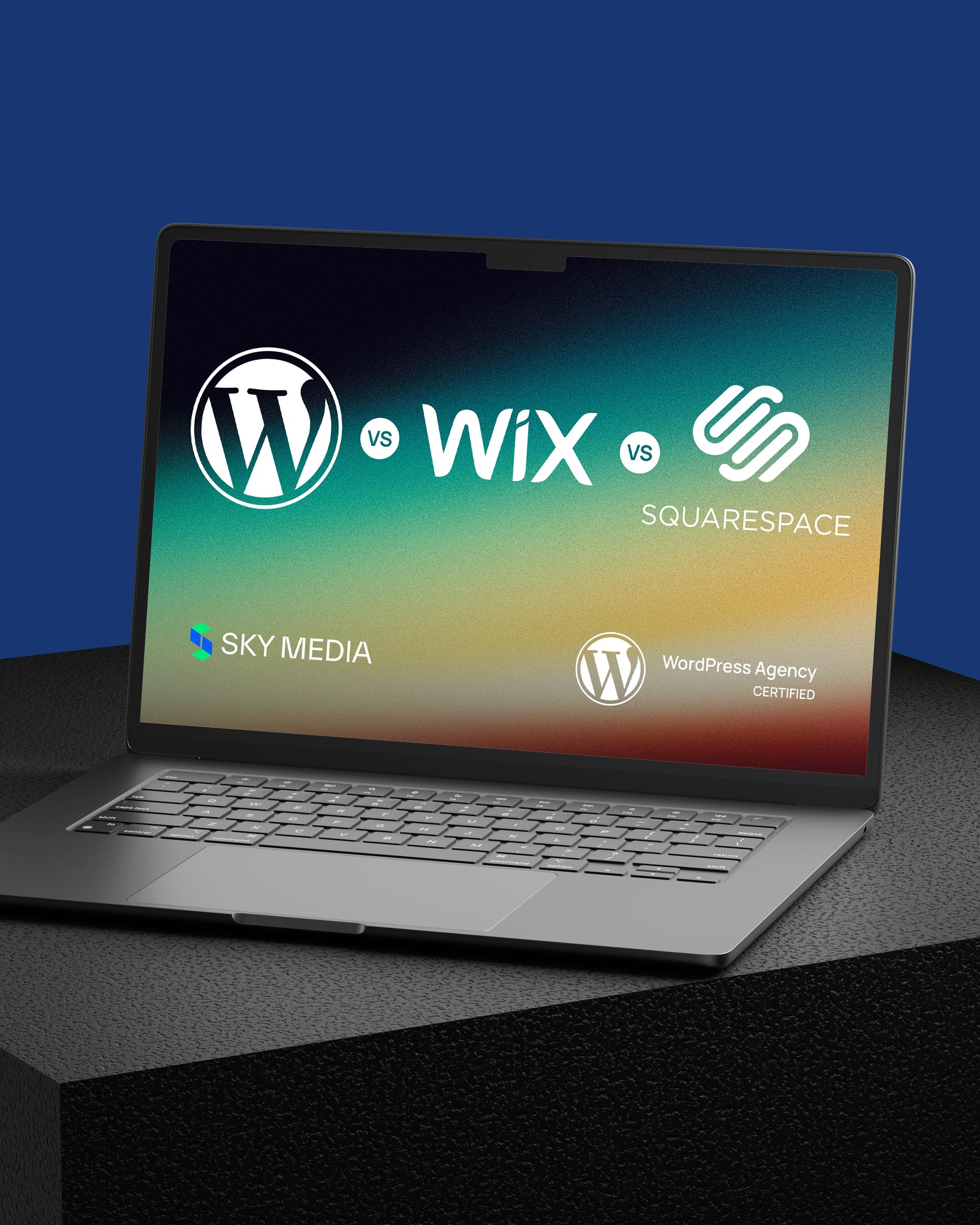
And not just by a little — the difference in ranking potential, flexibility, and long-term growth between WordPress and platforms like Wix and Squarespace is enormous.

  • In this article, we’ll break down:
  • Why WordPress dominates SEO rankings
  • The key limitations of Wix and Squarespace for SEO
  • How WordPress supports long-term scalability, management, and functionality
  • Why businesses in SEO Auckland, SEO Christchurch, and SEO Wellington markets benefit most from WordPress websites
  • How Sky Media, a certified WordPress specialist in New Zealand, can help you dominate your local search results

WordPress Is Built for SEO From the Ground Up

One of the biggest reasons WordPress outperforms Wix and Squarespace is that it’s an open-source platform designed for complete SEO control.

Unlike “drag-and-drop” builders, WordPress allows you to optimise every single element of your website for search engines:

  • SEO-Friendly URLs – You can set clean, keyword-rich URLs like www.yoursite.co.nz/seo-auckland instead of random strings of characters.
  • Meta Title & Description Control – WordPress integrates with powerful SEO plugins like Yoast SEO and Rank Math, making it easy to create optimised page titles and descriptions.
  • Image SEO – Easily add alt tags, captions, and compression to improve both rankings and site speed.
  • Heading Structure – You can fully control H1, H2, H3 tags for keyword targeting.
  • Schema Markup – Add structured data to improve click-through rates in search results.

Example: If you’re a SEO Agency in Auckland targeting “SEO Auckland” as a keyword, WordPress makes it easy to place that keyword in page titles, headings, meta descriptions, and image alt text — without fighting against a restrictive page builder.

Wix & Squarespace’s SEO Limitations

While Wix and Squarespace have made progress in recent years, they still lag behind WordPress in critical SEO areas.

Limited Control Over Technical SEO

  • URL Structures – Wix and Squarespace often force certain URL patterns (e.g., /blog/post-name) instead of letting you customise slugs completely.
  • Canonical Tags – Setting custom canonical URLs can be tricky or impossible without third-party workarounds.
  • Sitemap Control – You can’t easily edit or customise your XML sitemap, which is crucial for large sites.

Slower Site Speeds

Google has made page speed a major ranking factor. While you can optimise images and caching on WordPress, Wix and Squarespace’s all-in-one hosting limits server optimisation. Their websites often load slower, especially for image-heavy or e-commerce sites.

Less Mobile Optimisation Flexibility

Mobile responsiveness is essential, especially for local search in SEO Christchurch or SEO Wellington markets. With Wix and Squarespace, you’re limited to the responsiveness of their templates — while WordPress lets you build truly mobile-first designs.

Less Mobile Optimisation Flexibility

Mobile responsiveness is essential, especially for local search in SEO Christchurch or SEO Wellington markets. With Wix and Squarespace, you’re limited to the responsiveness of their templates — while WordPress lets you build truly mobile-first designs.

Weaker Plugin Ecosystems

Wix and Squarespace have a small library of extensions. WordPress has over 60,000 plugins for SEO, marketing, analytics, and performance — giving you endless optimisation opportunities.

Why WordPress Websites Rank Better

When we work with clients in Auckland, Christchurch, and Wellington, we consistently see WordPress sites outrank Wix and Squarespace sites. This is because Google rewards websites that:

  • Have faster loading speeds
  • Follow clean code structures
  • Use optimised metadata and schema
  • Provide a better user experience
  • Are easier to crawl and index

WordPress makes all of these achievable without hitting platform limitations. Wix and Squarespace may work for a simple brochure site, but as soon as you need serious SEO growth, you’ll hit a wall.

Scalability: The Long-Term SEO Advantage

If your business is investing in SEO Auckland, SEO Christchurch, or SEO Wellington campaigns, you need a CMS that can grow with you.

With WordPress:

  • You can start small and expand to thousands of pages.
  • Add e-commerce, booking systems, membership portals, and custom applications without rebuilding your site.
  • Keep full ownership of your content — you’re not locked into a proprietary platform.

With Wix/Squarespace:

  • You’re stuck within their ecosystem.
  • Limited design flexibility and SEO control make scaling difficult.
  • Adding advanced features often requires switching platforms entirely.

Management, Support & Functionality: WordPress Wins Again

Easier Management

With a well-built WordPress site (like those designed by Sky Media), content management is straightforward. You can add blog posts, update service pages, and upload media without touching code.

Wix and Squarespace may appear simpler at first, but as your site grows, managing large amounts of content becomes cumbersome due to their rigid backend structures.

Better Support

    • WordPress: Millions of developers, agencies, and forums provide free and paid support. You’re never locked into one provider.
    • Wix/Squarespace: Support is limited to their internal help teams and documentation — and you have to wait on their timelines.

More Functionality

Need to integrate with a CRM, run advanced A/B testing, or add a complex booking system? WordPress can do it. Wix and Squarespace have far fewer integrations and often require expensive workarounds.

Local SEO Superiority for NZ Businesses

If you’re competing in Auckland, Christchurch, or Wellington, SEO Auckland is everything. WordPress offers:

  • Customisable location landing pages for each city you target (e.g., /[your service]-auckland, /[your service]-christchurch).
  • Full control over Google Business Profile optimisation through plugins and schema markup.
  • Faster site performance for better rankings in location-based searches.

For example, a building company in Christchurch targeting “Renovations Christchurch” can create optimised service pages, publish regular blog posts, and run content marketing campaigns directly from WordPress — all while tracking results with built-in analytics integrations.

Real-World Example: How Sky Media Gets Results

At Sky Media, we’re a certified WordPress specialist in New Zealand. We’ve helped dozens of businesses switch from Wix or Squarespace to WordPress — and every single one has seen an improvement in search rankings, website traffic, and conversions.

For example, Lily’s Choice, a Christchurch based business came to us with a slow Wix website that wasn’t ranking for any of their target terms. After moving to WordPress and optimising for SEO Christchurch:

  • Their organic traffic doubled in six months.
  • They ranked on page one for their main keywords.
  • Their leads increased by 70%.

See our SEO results.

The SEO Auckland, Christchurch & Wellington SEO Advantage

Here’s how WordPress gives you the edge in your local NZ market:

FeatureWordPressWixSquarespace
Full SEO Control
Fast Page Speeds
Scalable & FlexibleLimitedLimited
Plugin Library60,000+ free apps and extensions800 apps with most being paid apps31 paid extensions
Custom IntegrationsLimitedLimited
Ownership & Portability
Local SEO Ready

Why You Should Choose WordPress for Your Next Website

If you’re serious about SEO, scalability, and owning your digital presence, WordPress is the only real choice. Platforms like Wix and Squarespace may seem attractive for quick DIY sites, but they fall short when it comes to:

  • Competing in high-demand SEO markets like Auckland or Wellington
  • Managing large, growing websites
  • Implementing advanced SEO strategies

With WordPress, you get full control, endless flexibility, and the backing of a global community. And with Sky Media, you get a local, certified WordPress specialist who knows how to get results in New Zealand’s competitive digital landscape.

Ready to Rank Higher? Let’s Talk.

Whether you’re based in Auckland, Christchurch, Wellington, or any other region of New Zealand, our team at Sky Media can help you build an SEO-optimised WordPress website that actually delivers results.

  • Local expertise – We understand the NZ market.
  • Proven SEO results – Our clients dominate Google rankings.
  • Certified WordPress specialists – We build for performance and growth.

Call us on 0800 113 772 or contact our SEO experts online to find out how we can transform your website into a lead-generating, search-dominating powerhouse.

Final Word: If you’re choosing between WordPress, Wix, and Squarespace, and your goal is to grow your business with SEO — the winner is clear. WordPress isn’t just the best choice for now — it’s the only choice for the future.

Unlocking Online Success with Auckland SEO

By SEO

Are you aware of the potential power a strategic search engine optimisation (SEO) campaign holds for businesses in Auckland? If you’re wondering about the advantages of SEO but find yourself unsure, don’t worry. Sky Media, a time-tested digital marketing company in New Zealand, is here to tell you straight.

Our well-established reputation in Auckland’s SEO market is built around the fact we’ve supported hundreds of Kiwi businesses to tap into a steady stream of potential customers online. While SEO may seem complex, what truly matters is that people just like you are using Google every single day to find offers like yours. At Sky Media, we have the proven ability to get your website seen locally and New Zealand-wide.

Cracking the Code to Auckland SEO

Auckland’s SEO market revolves around refining your website to secure a prime position on Google’s search engine results page (SERP). Achieving higher rankings on super-popular search engines like Google leads to heightened visibility, a wider market, more people to your website, and a chance to gain new customers. Drawing insights from up-to-the-minute data, our team of SEO pros craft a selection of SEO Keywords tailored to your Auckland-based business. With Sky Media, your SEO campaign is built to match daily searches from local Kiwis actively searching for products and services like yours.

The Pros of Auckland SEO for Kiwi Business Owners

Attract New Website Visitors: Strategically optimising your website using data-driven SEO Keywords, paired with a range of cutting-edge SEO strategies, results in an increase of visitors to your web address. Greater traffic to your site translates to a larger pool of potential customers, expanding your market for business both locally and nationally.

Elevate the Experience: Our advanced SEO approach considers your website’s functionality for the people who use it. This includes optimising its loading speed, ensuring mobile compatibility, and enhancing user-friendly navigation. As Google Partners, we know Google wants its users to have a modern user-friendly experience, so the engine only prioritises websites that are fast and easy to use on a mobile phone. We’ll make sure your website is all that and more to give your site the competitive edge.

Targeting the Right Audience: The strength of Auckland SEO is that businesses like yours get to home in on select SEO Keywords and phrases that match with your business’s offerings and location/s of operation. Pinpoint precision like this ensures that your site becomes a magnet for Aucklanders actively seeking what you’ve got to offer. This highly targeted approach is the reason why SEO is our #1 marketing strategy.

Long-Term Return on Investment: Unlike on-again, off-again pay-per-click advertising, SEO is a strategic, steady, long-term investment that offers greater benefits over time. While it might take a few months to ascend to Page 1 of Google’s search results, once you’re there, the rewards are endless. Auckland SEO is a business asset designed to fuel your business’s growth non-stop.

Sky Media – Your SEO Ally in Auckland

Partnering with Sky Media for your Auckland SEO goals means partnering with a tried and tested digital marketing team that’s been looking after Kiwi business owners for more than 5 years. Here’s why Kiwi businesses from Invercargill to Auckland choose Sky Media’s team for SEO:

Experience and Expertise: We know New Zealand’s digital marketing world like the back of our hands. Our experienced team have sharpened their skills and crafted effective SEO strategies based on local, national, and global data. By staying at the forefront of SEO trends and best practices, our experts get top results for our Kiwi clients daily.

Real Results, Visible Progress: Our well-designed SEO campaigns are engineered to yield measurable results within defined timeframes. In full transparency, we provide regular updates, reports, and analytics, affording you the ability to track your campaign’s progress every month. Remarkably, we’ve succeeded in getting 84% of Keywords to Page 1 of Google within just 6 months! Ask us about our Page 1 guarantees for select Keywords.

Tailored Strategies for Business: We know every business is unique, so we offer a personalised approach, not a one-size-fits-all throw together. This commitment drives us to design custom SEO strategies that align with your business’s goals, target audience, and slice of the market. This tailored approach ensures your Auckland SEO campaign is primed for success on your terms.

In a world of smartphones, a strong online presence is essential for modern business success. By harnessing the power of Auckland SEO, you position your website for greater online visibility, more potential clients, and increased market share. As Certified Google Partners, we’re set to guide you through the SEO journey, consistently getting results for your Kiwi business month after month. Speak to us today, and together, we’ll take your business to new heights online and offline.

Benefits of Long-tail Keywords for Google SEO

By SEO

At Sky Media we make SEO (search engine optimisation) easy to understand. You may not know all about SEO, but you’re probably using it everyday. If you’ve ever typed, ‘Restaurant near me,’ ‘Best builder in Christchurch,’ or ‘Makeup artist Auckland,’ into Google, then you’ve used SEO.

Our team sees the benefits of SEO in business everyday and we know that Long-tail SEO Keywords can provide powerful results for anyone selling products, or services people want, or need.

Are you wanting to see heaps of people visiting your website? Are you looking for ways to increase revenue for your business? Are you wanting enquiries, bookings and purchases from people who want what you’ve got? Well, your website needs Long-tail SEO.

A Quick Overview of SEO

Search Engine Optimisation (SEO) is the most cost-effective way to ensure your business’s website makes its way to Google’s 1st Page, where everyone’s shopping nowadays. Everyone? Well, 75% of all Google users only shop on the 1st Page, while the other 25% stop at the 2nd Page. That means, if you’re Page 3, or beyond, you’re not getting found by anyone.

Our Google SEO ensures your business is front and centre on Page 1 where it belongs. One of the fastest and most effective ways to do this is Long-tail SEO Keywords, and that just means the Keywords are longer than Short-Tail SEO, for example:

  • Short-tail SEO – Builder Auckland
  • Long-tail SEO – Bathroom Renovations in the North Shore

Typically, it’s easier to get on Google’s 1st Page and get traffic coming your way, when you use Long‐tail SEO Keywords. They’re much more specific and therefore highly targeted to your ideal audience. It means that when people land on your website (and many will, when you’re on Page 1), it’s much more likely that they’ll want what you’ve got.

Long-Tail SEO – One of Two Ways, or Both?

Long-tail SEO can be done one of two ways (or both), depending on your business goals. You can go niche and specific, or take the large-scale big blast approach. In many cases, the businesses that can afford to do so, do both.

For many businesses niche specific Long-tail SEO Keywords like – ‘Custom kitchen installations in Christchurch,’ can actually be quite valuable. These SEO Keywords are worth going after, even though they may have a small volume of Keyword searches each month, because it’s highly likely these people want exactly what you’ve got. If only 12 people search that term in Christchurch each month, but 3 of them end up purchasing from you, that’s a big conversion, that’s a win.

Benefits of Niche and Specific Long-Tail SEO:

  • High Conversions – These searchers will probably convert into buyers.
  • Low Competition – These niche Keywords aren’t used by a lot of sites, yet.

The Key to Niche Search Terms for Your Business

  • Choose Long-tail SEO Keywords specific to your business or industry e.g “Back waxing for men in Merivale, CHCH.”
  • Choose Long-Tail SEO Keywords that will convert into sales e.g the terms match exactly what you have for sale in the location you expect to sell it, for the people you plan to sell it to e.g back waxing (service) for men (target audience) in Merivale, CHCH (location).
  • Choose very low-competition Long-Tail SEO Keywords, because that means you can get your site to Page 1 of Google quickly and easily.

You don’t need to be targeting all the Long-tail SEO Keywords you can think of, but simply speak to us to brainstorm the ones that are likely to be beneficial. Our SEO Experts will conduct research to confirm the top-performing SEO Keywords for your market, then we’ll look at targeting the services you’d prefer to target.

With Sky Media’s approach to SEO, it’s highly likely your website will see results in less than 90 days, especially for Keywords with long tails. Speak to our team to get your free Google WOF Report, where you’ll find exactly where your site’s positioned for SEO Keywords that are specific to your industry.